Tuesday, July 21, 2009

Our Brother's Keepers? Not Quite!


It looks as if ObamaCare is running into snags that may postpone or even stop the passage of this massive health care reform effort. It appears that now even the Democrats are balking at the projected expenditures. But on a purely social level, I think The People are having trouble accepting this idea. It is coming down to a question of exactly how much do we want to to be forced to help our fellow citizens?

This bill will eventually put all of us into the same health care system. After all, the "boss" has said that we are all going to have to "sacrifice" a bit to do this. But how much do we each have to sacrifice? And more importantly, how much are we each willing to sacrifice, and for whom are we going to sacrifice?

Most of us feel we sacrifice each day. We get up, go to work, and "put in our time." Most of us feel that work "gets in the way of living." If we are going to sacrifice, it has to be for a good cause, doesn't it? What then is a good cause?

How about sacrificing for the smokers who have puffed for 50 years and can't stay out of the hospital? And how about the "drugies" who get heart infections from using dirty needles, or even how about for those who eat themselves into enormity, and just can't walk across the room anymore? Do most of us believe that personal sacrifice is worth it for these problems? Don't kid yourself those who are "towing the line," and trying to make their lives decent and fruitful don't believe it is. That's one good reason why this idea is going to fail. The people don't believe it is fair.

I don't think most of us are willing to give to people who just don't try to take care of themselves. It is probably OK for those who run into unfortunate problems that are out of their personal control, because we all have this risk, and would want help if it happened to us.

Then there are more difficult questions. How about sacrificing for the 88 year old with cancer who continues on dialysis for months before death? How about continued feeding for a totally demented person who doesn't even know his own family? All personal choices that we will all pay for under this proposed systems. Why are these questions important? Because if the government (WE) is paying for health care, we will have to pay for these things. Do we want to?

Then there are the proposed taxes on the wealthy. Why should we single out the most successful people in the society, to pay for this. They are paying enough already aren't they? The upper 3% of tax payers pay about 60% of the taxes to start with. What is a fair tax anyway?

I don't think anyone should be forced through taxes to give more of their life to the government than anyone else. Why should one person have to work through May to pay taxes, and other people only have to work through February to pay theirs. I think it is morally questionable to take more "life" from those who have achieved the most in this society, and force them to work through May for the government. This is simply a case of class warfare, and it is not much different than "picking" on a group of people because of another unique characteristic like maybe the color of their skin!

This scheme raises too many questions about the fundamental relationship of our government to its people and the relationship of the people to each other. We are a people who believe in individuality and personal freedom. The collectivist concepts in this maneuver are difficult to sell to us. Thank God they are difficult to sell, for that implies that there may still be hope for all of us for a better future.

James P. Weaver, M.D.

Wednesday, July 1, 2009

Obama Care. Humbug!


I have been watching the developments in the Obama Care parade, and I have not commented, because he talks about the "nay Sayers" in an effort to discredit us, but I can't keep quite anymore. Too much astute distortion and half truths are flooding the airways that something must be said about this "obamination."I listened to most of his speech to the AMA. Listening to the applause of that bunch of sycophants, hoping that the income of the primary care doctors will be raised, made me nauseated. They don't care what happens to the field of medicine, or the patients, because anyone with half a brain can see that Obama's vision of health care will be a catastrophe.

His first two methods of financing this debacle will be the EMR (electronic medical records), and preventive care. What a joke. I do believe the EMR will help transmit information so it is not duplicated, but that is a drop in the bucket. Who, may I ask, will pay for the installation of this technology into any of the offices? The software people have not had to deal with "maximal allowable charges" as medicine has, so we cannot pay their exorbitant fees.

But the biggest fallacy of Obama cost saving ideas is "preventive care." He thinks we are going to get everyone to eat right, stop smoking, and exercise. I guess if they earn less than $250,000 per year he will pay them to live healthy. He has no idea what the practice of medicine is about. I have been trying to get people to do this for 30 years. They do what they want to. Maybe the government will FORCE people to do these things. His ideas like this make me wonder how unrealistic his other ideas will be about this topic. It's brutally frightening!

As for malpractice reform, physicians didn't get the time of day from this highly trained lawyer. Any physician knows that many dollars are wasted in defensive medicine. I guess the lawyers stick together. More importantly,I worry that the most powerful man in the world cannot get the perspective of physicians that are being robbed by the malpractice insurance companies each year with exorbitant fees. Why don't the patients foot some of this bill? They could purchase a policy prior to any procedure, to cover "insurance." That policy could stipulate that Obama's sacred "caps" would not apply.

Another area which is dubious is the total lack of discussion of the physicians in these plans. After all, our government is about to enslave a group of highly trained,educated, hard working people to "give" their talents to other citizens for a government controlled fee. In controlling these "fees" the government has a fundamental conflict of interest: they're paying the bills and they can't afford it. It doesn't look good for the physicians.

Each time the government puts in another program in place, they split the medical profession along specialist and generalist lines to gain the "support" of medicine. There are many more primary care physicians than specialists; it's easier to get that training, and the lifestyle is easier. I had eight years of training after medical school myself to become a vascular surgeon. Obama has promised the primary care doctors "more" to get their support. The problem is that primary care doctors may be replaced by nurse practitioners and physician "extenders" in the new Obama care. Their work comes cheaper, and, after all, he plans to "save money" to pay for this thing by cutting expenses in the delivery of medical care.

Finally, I agree with him that something needs to be done. But let's first be honest with our citizens. I'm sorry folks, but we cannot all have everything we want from medical care and, I fear, everything we might need to stay alive and comfortable.We will have to ration.

My suggestion for a good start would be to control the third party bureaucracies, cap malpractice awards, tax alcohol, and cigarettes, and continue medical savings accounts, but get the third parties out of them. Finally, the Congress should not have access to any better medical care than the rest of the country.

James P. Weaver, M.D., FACS

Monday, June 1, 2009

No Doctor's Rights in Health Care Reform


There's an interesting article in USA Today on June 1, 2009. It talks about the coming health care reform. It mentions how the insurance industry is lobbying because it has concerns that the government might create a government insurance industry competing with its interests. It also talks about the pharmaceutical industry that is worried about the imposition of price controls, and how it is fighting to prevent that from happening. Unfortunately, there is a notable absence of any mention of an important contributor to medical care delivery- the physician.

It's almost as if the physicians don't matter and, unfortunately, I don't think we do. We are regarded as "workers" in this system. We do what we're told, we continue to "provide" and why does anyone have to shape any of this imminent change to suite our needs? The government has cut our reimbursement for the past 15+ years, and no one has done anything about it. In addition, multiple regulating agencies have "controlled" us from every direction without much more than a peep from any of us. We are pushovers.

Someone better get into this debate that
represents the "interests" of the physicians. Those interests can be satisfied in a simple way. The message is, we need a health care system that considers the needs of the providers, and creates an environment that allows physicians to feel free to take care of patients without government oppression and manipulation. Is that possible? You bet it is, but not with the attitudes I see in the current news.

If it doesn't change, we will have too many disappointed physicians in their 40s who don't like the job situation they are in. They will provide perfunctory care, and neither the doctors nor the patients will be satisfied.

James P. Weaver, M.D.,FACS

Saturday, May 16, 2009

Reunion and Change


I went to a 40th Class Reunion this weekend. Its been forty years since I graduated from medical school. It doesn't need to be said, but those years went by in an instant: marriage, children, internship, moving, residency, first job, residency again, moving, and then the long run of my most "productive" years of work. It goes by too, too fast.

Sometimes it was difficult to recognize those classmates who accompanied me on that educational journey of a lifetime- too much time had taken something away from them. Some could hardly recognize me either. We visited the rooms and laboratories that we haunted 40 years ago. I always get an inexplicable feeling about the passage of time when I visit a place I have not been to in years. I just don't understand where the time goes, and why everything looks as if it has not changed much even though all this time has passed. Remembering the chemistry, physiology, anatomy labs with all the struggle, and learning and discovery inspires one to reconsider what actually happened. A lot of growing happened during those years.

During the weekend we went to lectures, and dinners, and visited each other after a 40 year hiatus. I recalled that my medical school filled me with information galore, but it also filled me with a professional ethic that has carried me far into my surgical practice. It's the PATIENT FIRST. That's the "old time" professional ethic. It was a pleasure to be with 35 of my classmates who understood their calling the same way I have understood mine for all these years. I know times are different now, but when we graduated in 1969, the majority of us were not thinking about "life style" we were just going to be physicians-that was our "life style" choice.

The only discouraging experience of the weekend, was the lecture by the person who tried to teach us about "Medical Education in the 21st Century." Why discouraging? The message was that my generation was gone and out of touch. The new generation was concerned about their "lifestyle:" how much time they would have with their family, how much less work they would have to do, how short their work day would be, and possibly how much they would earn. I got the feeling they didn't want to work the same way we did. I worried about their understanding of Professionalism.

Now I don't want to criticise the younger generation, be it x'ers, or the me generation, or whatever, but I worry that this "life style" choice is a reflection of a deeper motivation that threatens the essence of what it means to be a physician.

An essential purpose in all of our lives is the positive effect we can have on others we encounter. Physicians have the privilege of working in a milieu where we can satisfy this need. We do it by becoming "professional."

According to Dr. Edmond Pellegrino, of Georgetown University, professionalism in medicine is played out on the stage of the physician-patient relationship. The patient comes to us vulnerable, frightened, confused, and in need, and for the physician to satisfy that need, we must have an ethic of self effacement, and sacrifice. This is the essence of professionalism. A "life style" choice does not seem like a creditable start towards this goal.

There are many forces in medicine today that are threatening professionalism and driving a wedge between the patient and the physician. I do not know what the result will be if the younger generation of physicians loses sight of the necessity of self effacement and self sacrifice as they enter this special field. Caring medicine cannot survive without a professional commitment of its doctors. I hope the younger generation can learn that professionalism in medicine requires a commitment to the patient that can hamper one's "life style." Unfortunately, that's what it takes to be a doctor.

James P. Weaver,M.D.,FACS

Wednesday, May 13, 2009

Addition to "The Hospice Threat"

A recent conference in the Congress deals with the "threat" of Hospice becoming the rationer for the elderly. Listen to this Professor give his opinion about this issue. There are few ways out of this money crunch. Saving dollars from medical care means cutting somewhere, and the elderly are a good target! See this video:
See :"The Hospice Threat", this blog, January 19, 2009.

Saturday, April 11, 2009

Motorcycling and Surgery


I'm afraid to write this because it might cut into my credibility, but the internet is a "safe" place to write, so here goes.

I am a surgeon, and I also ride a motorcycle. I have ridden off and on for forty years! I rode for a while while I lived in Cleveland, Ohio, but it was too cold, and the children were too young, and it wasn't very safe in a big city. So I sold the bike (a 1969 Triumph tiger) and quit for about 20 years.

In my early 40's I picked up the bug again, and bought a Yahama Virago, and living in North Carolina then, I decided to ride the length of the Blue Ridge Parkway. If you have never ridden on this road it is a must. Probably one of the most beautiful roads in the United States.

Well, I practiced, took the Motorcycle Safety Foundation course on safety, and took a 10 day vacation and took the trip. It was beautiful. I stayed with friends along the way, and had a ball. I had intended to sell the bike after the trip, but I didn't and that was over 20 years ago. Since then, I have been up to Ohio to the Vintage Motorcycle Days meeting, ridden across the USA twice, and traveled up the northeast part of the country besides taken numerous smaller trips of a few days in the surrounding vicinity. Finally, I took a once in a lifetime 10 day trip over to Europe and traveled through the alps. It just never left my blood, and I still yearn for more travels.

But why do I do this, and for that matter, what can it possibly have to do with surgery? More that most of you folks that do not ride a motorcycle can imagine.

To get right to the point, motorcycling is like surgery because you have to know what you are doing or you get your butt in a jam. You have to know the rules, be careful, and watch our for unexpected circumstances. The major difference is that when you ride a motorcycle, you get a full sense of freedom and a deep appreciation of the nature of your surroundings.

It hurts me to go to a state (like Arizona) where there are no helmet laws, and see riders biking without a helmet. That makes me immediately think they do not understand the depth of the risk. They are being foolish as far as I can see. When I see someone drinking alcohol, and biking, I get the same feeling. I guess that's why they are not surgeons. There are more effective ways to demonstrate the idea of individual freedom. Our heads are fragile at 25mph, and it's just not worth it.

Because I do what I do, I feel at home on a bike. The best part is that even though I am in familiar surroundings, I can get the additional benefit of the feeling of freedom. I don't get that in the operating room.

So when you ride, I would advise you to ride safe. Wear good clothing, helmets, and shoes, and enjoy the experience. I have enjoyed it for years, and hopefully can continue to enjoy it for many more.

James P. Weaver, M.D., FACS

Thursday, April 9, 2009

Safety and Liberty, always competing


Safety and Liberty, two ideals which are constantly competing for primacy in our tempestuous lives. Most of us do not even see this battle, but it is going on in many venues. We just have to look for it.

I became aware of this struggle, and ordered my priorities in the battle over motorcycle helmet laws. I wanted more liberty, because I believe liberty strengthens us to face life as confident people. Liberty gives us the essence of our yearning to be a whole person. To have liberty, to be free, is an instinct infused into our souls at creation. We continue to search for it.

With the motorcycle helmet laws, the "safety people" want everyone to wear a helmet at all times- it's safer. The "liberty people" want to have the freedom to choose. Yes, they are safer, and I always wear one when I ride, but safety is not the only, or for that matter, the most important issue to consider.

The safety people want to preserve life-their priority- by being safe. Understood. But in the choice between life and liberty, which is the most important? My assessment is liberty! It is certain that many of us have sacrificed life to preserve liberty. Isn't that why many of us have died in war? In a multitude of circumstances, liberty easily trumps safety.

I can think of many examples where this battle rages on lesser levels: bicycle laws about helmets, seat belts in cars, walking up a hill with your 8 year old child, playing high school sports, and almost anything where their is a danger to life or limb. I believe that a child raised without liberty and all safety will lack essential attributes to succeed in the world: self confidence, ambition, and creativity to name a few. But again, from my perspective, liberty is most important.

The latest area in medical care which illustrates this conflict is the area of "patient safety." I don't have anything against patient safety, but it can go too far. Currently, it has become such a craze, that it is threatening to remove any semblance of professional liberty from the practice of medicine. Not only do we surgeons talk to the patients about their surgery, and have them sign a "request" for surgery, but we have to mark the site of the surgery before the patient enters the operating room, and then do a "time out" and repeat it all over again. The latest potential addition to this liturgy is a World Health Organization check list that the followers of this movement are potentially going to lay on us!

In surgery, this control came about because of "wrong patient or wrong site surgery." But how many of these occur (the numerator) and how many surgeries are there anyway (the denominator)? Isn't there a little bit of throwing out the baby with the bath water here?

I do not think we have carefully thought this through. "Safety uber allis," and to hell with liberty. There is no understanding or concern of the culture that this oppressive system is creating.

Do the safety people believe that physicians cannot create a safe environment or that they do not think patient safety is laudable? We have been thinking about it since the Oath was first spoken.

Physicians, especially surgeons, are a motivated group. We have succeeded in elementary school, high school, college, and have gone through rigorous training to reach a high level of societal responsibility. This is the essence of the "professional liberty" that society previously granted for completing this training. For me, and many others, this quest for liberty, is one of the motivations that propelled us along this arduous road. Is it wise to take this liberty away?

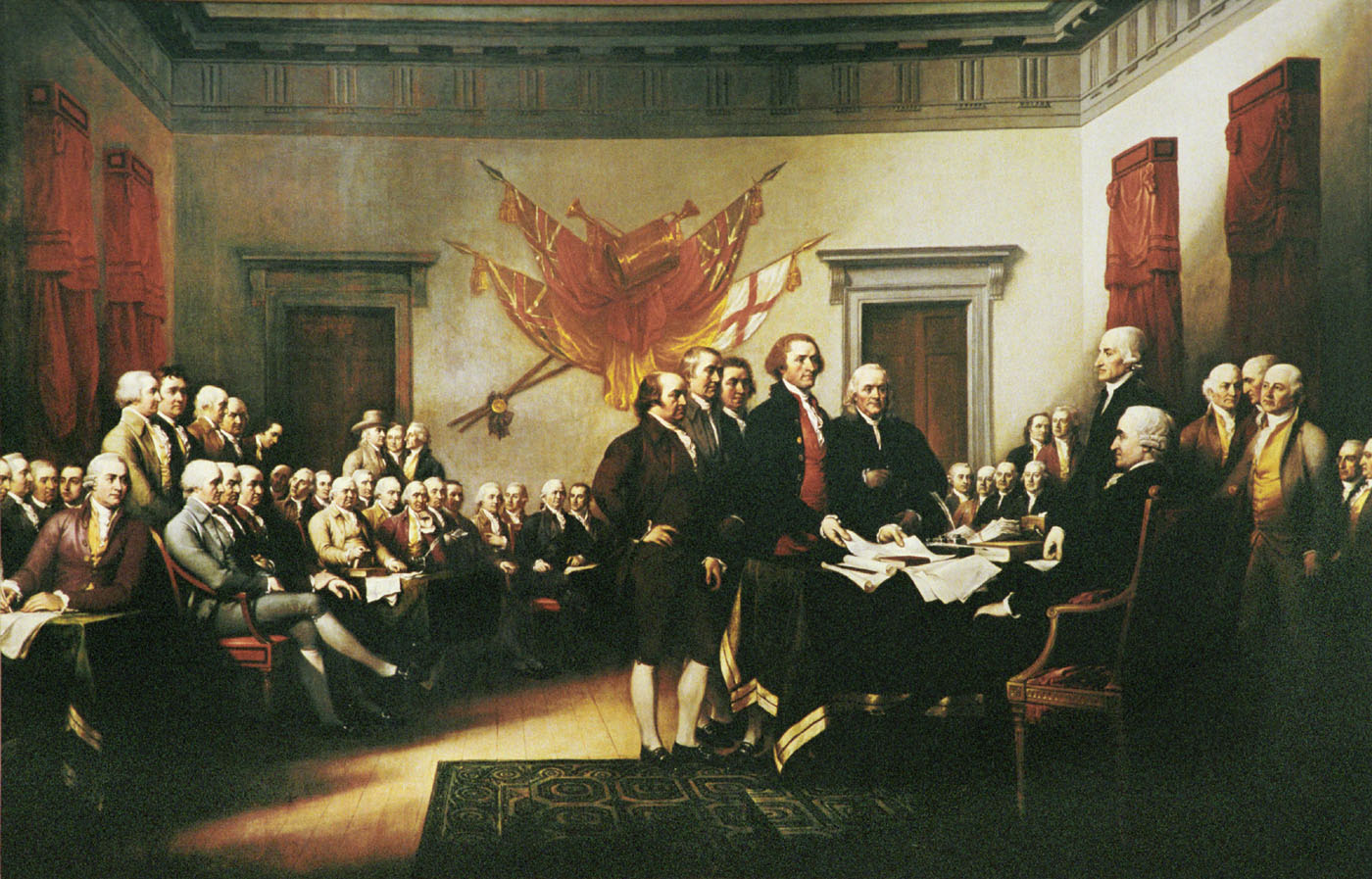
"We hold these truths to be self evident, that all men are created equal, that they are endowed by their Creator with certain unalienable Rights, that among these are Life, LIBERTY, and the pursuit of Happiness." These words were written by wise men. They were chosen because they understood the importance of liberty as essential to a full life. They didn't say "life, safety, and the pursuit of happiness." Many of them died in defense of their philosophy.

Patient safety must develop limits to its protocols. The continued erosion of professional liberty will not promote the excellence in medical care that we all strive for. Further equitable cooperation between practicing physicians and regulators must occur to preserve professional liberty and produce the optimal outcome for patient care that we all covet.


James P. Weaver, M.D.,FACS