A recent news article reported that Arizona's governor, Jan Brewer, has proposed a $50 dollar fee to the state's Medicaid recipients if they smoke, or if they are obese and don't succeed in following doctor's orders to lose weight or stop smoking. Private insurance plans are already using these techniques, but government sponsored programs have not previously used dollar incentives to control behavior. The Governor has proposed these changes to help cover the soaring costs of the state's Medicaid program. Medicaid is one of two programs, along with education, that rank as states' top two expenses.
While our nation moves further into a national health care coverage, the forces of inter-societal tensions will continue to rise as we share the burdens of our brothers and sisters illnesses, some of which we will inevitably view to be a result of irresponsible behavior. This proposed $50 fee is an example of the growing desire to force those undisciplined individuals among us, who raise the cost of everyone's health care coverage, to cover some of those costs themselves. But where should we draw those lines? What if the person can't help himself? Should smokers pay more to a national health system? How about heroin addicts? I could go on...
I once encountered a young woman (around 40+) in my medical office applying for disability because of vascular disease. She had previously had major surgery for an occluded (closed) major artery in her abdomen, and had been told to stop smoking because it contributed to her vascular disease (good evidence supports this idea). When she reported that she was still smoking, I explained that she should not ask me to help her apply for disability coverage because I felt it was wrong for her to ask others to give her money when she was doing something to "cause" her disability. She never came back to my office again. Was I right? I think so, and the $50 dollar fee is just a governmental example of my individual censure of this patient.
In the health insurance arena, "no man is an island" seems to certainly apply for the "sins" of each of us end up costing everyone, and because of the high costs of medical care those "costing" the system will likely generate an amount of subtle public disdain. We all understand that some illness is not, as far as we know, related to any "sinning." The child with a kidney tumor, the elderly adult with a brain tumor, the auto accident caused by someone else, again, I could go on. Is it fair to have these persons pay more because of an illness that they did not create themselves? I think not.
But then there is the self-created illness. Very likely lung cancer, and certainly emphysema, sub acute bacterial endocarditis in an addict (from dirty needles), these are self induced, and clearly the result of abhorrent behavior. But when I think about it, what of the accident while driving a motorcycle? I happen to ride one for recreation. Some folks might say this is dangerous behavior, and the individual should pay more for medical care--some insurance companies, I have heard, won't cover motorcycle accidents. That might seem clear to some people, but now lets take rock climbing (something I have no interest in). If someone falls, who should pay? When I think about it, the dividing line between risky and responsible behavior becomes vague, the deeper we analyze. It almost seems that one person's risky behavior is another person's recreation.
The purpose of insurance is, by the way, to have a big enough group, so the costs are spread around equally. Those taking the "higher risks", ostensibly seem to be all of us. Who doesn't climb a ladder, or speed in their car, or eat too much butter (me), or a million other "dangerous" behaviors. I don't think we can separate any one kind of behavior as dangerous, because much of what we do is dangerous. Let's face it, living is dangerous, and we all contribute to the costs of medical care. So as for charging extra to smokers, or those who eat too much, I'm not convinced it's fair. Governor Brewer, I'd reconsider your decision.
This blog will continue to comment on the state of American Medicine, but I will now widen the scope of my comments. Politics, culture, and the nature of many things are now open for discussion as we move into the future together.
Showing posts with label Rationing medical care. Show all posts
Wednesday, April 6, 2011
Wednesday, March 16, 2011
United States Code: Title 42,1395. Prohibition against any Federal interference | LII / Legal Information Institute
The above reference is the actual first paragraph of the Medicare Law which was passed in 1965. It is clearly an example of the extension of control that results when the Federal government "moves" into an area of public interaction. Even the title is, unfortunately, a lie: "Prohibition Against Any Government Interference. " Please follow the above link, and read the paragraph.
It is a fact, that the Federal government totally controls (or interferes) with the delivery of medical care. It controls admissions, discharges, payment to all involved, and rules, rules, rules. There are career ending "threats" if you don't obey these rules, and overall it has become an oppressive system for all "providers."
There are many reasons physicians are losing--or have lost-- their Professionalism, but the above departure from this earlier "promise" is pivotal. Society shouldn't want physicians to lost their distinction as "Professionals" for if they lose it, when someone is sick and in need of a physician's help their will be the feeling that you were treated with the same level of compassion as a customer ordering a hamburger at the McDonald's take out window. Not a pleasant thought!
I think it is important that we remain vigilant of this departure from government's original promises when Medicare was passed, and its eventual control of the system. Didn't we just pass a "drug benefit"? Where will the "control"of the pharmaceutical industry be ten years from now and how will it affect the pharmaceutical industry. Keep your eyes open.
The above reference is the actual first paragraph of the Medicare Law which was passed in 1965. It is clearly an example of the extension of control that results when the Federal government "moves" into an area of public interaction. Even the title is, unfortunately, a lie: "Prohibition Against Any Government Interference. " Please follow the above link, and read the paragraph.
It is a fact, that the Federal government totally controls (or interferes) with the delivery of medical care. It controls admissions, discharges, payment to all involved, and rules, rules, rules. There are career ending "threats" if you don't obey these rules, and overall it has become an oppressive system for all "providers."
There are many reasons physicians are losing--or have lost-- their Professionalism, but the above departure from this earlier "promise" is pivotal. Society shouldn't want physicians to lost their distinction as "Professionals" for if they lose it, when someone is sick and in need of a physician's help their will be the feeling that you were treated with the same level of compassion as a customer ordering a hamburger at the McDonald's take out window. Not a pleasant thought!
I think it is important that we remain vigilant of this departure from government's original promises when Medicare was passed, and its eventual control of the system. Didn't we just pass a "drug benefit"? Where will the "control"of the pharmaceutical industry be ten years from now and how will it affect the pharmaceutical industry. Keep your eyes open.
Friday, March 4, 2011
Nigerian doctors strike work - Africa - Al Jazeera English
What a sad story. Doctors in Nigeria are on strike. Patients die and no care is given, because they want to be paid the same as doctors in "government" hospitals. They currently earn about $700/month. http://english.aljazeera.net/video/africa/2011/03/201132154530341529.html
All doctors, and I'm certain these Nigerian doctors, respect the "Oath" to treat patients, and realize that patients are the number one priority for a physician. How could they not? Patients, that are suffering, are vulnerable, and hurting are difficult to ignore. To deny their patients care, I believe reflects on the work environment of these physicians. Giving up a fundamental obligation would only be done if the pressures are too great.
A host of pressures will effect U.S. doctors as health care reform takes hold, and the pressure "to earn" increases. Will that happen? Certainly. ObamaCare, or something like it is coming down the pike and I don't think the Republicans will stop this freight train. Even the American people believe something needs to be done and so do many doctors. One group that is not mentioned much during this debate are the doctors, and I believe that portends trouble for physicians.
Insurance companies are discussed frequently because they take too big a share of the health care dollar. Pharmaceutical companies are also mentioned for the same reason. Why are the doctors not mentioned-- aren't they are the driving force in the health care system?
The reason is that they are a small group, and they don't have enough political might to affect the deliberative process. Doctors in the U.S. pledge themselves to the welfare of the patient, and the politicians will surely take advantage of that promise in the "new" system. What are they going to do anyway, leave medicine?
But how will these health care delivery changes affect the function of physicians? I worry. Will it make them lean a bit more to doing a procedure that could wait for a test of time? Will it make them order an additional CAT scan on the machine they have invested in? Will they order another lab test from the lab they own a share in? Probably, and why, because earning a living is a potent motivator. Witness Nigeria.
I believe that this challenge ahead--income versus service--for the medical profession is as great as it has ever been. There will be no place for the Mercedes, the "mansions," and the elaborate life styles in the future. Physicians will be "public servants" in the real sense, or they will leave the profession. This will not happen in a short time, but in the future, the forces of control will change medicine from a "lucrative profession" to a field of giving. To avoid disappointment, young trainees need to hear and understand this message.
The premeds currently in college will realize these changes in their 40s, as the pressures of college age children, lifestyle, and retirement begin to enter their horizon. The majority of them will not have the "loose change" available to assuage their fears of "downsizing." Plainly, there will not be as much profit in the future for physicians and they will have to decide whether they will become public servants or leave medicine.
Don't be alarmed by these predictions. These days, I predict, lie 10 or 20 years in the future. But they will come. Unfortunately, when they do, the public will have to develop a keen sense of their medical care to survive as long as they can at a reasonable price.
What a sad story. Doctors in Nigeria are on strike. Patients die and no care is given, because they want to be paid the same as doctors in "government" hospitals. They currently earn about $700/month. http://english.aljazeera.net/video/africa/2011/03/201132154530341529.html
All doctors, and I'm certain these Nigerian doctors, respect the "Oath" to treat patients, and realize that patients are the number one priority for a physician. How could they not? Patients, that are suffering, are vulnerable, and hurting are difficult to ignore. To deny their patients care, I believe reflects on the work environment of these physicians. Giving up a fundamental obligation would only be done if the pressures are too great.
A host of pressures will effect U.S. doctors as health care reform takes hold, and the pressure "to earn" increases. Will that happen? Certainly. ObamaCare, or something like it is coming down the pike and I don't think the Republicans will stop this freight train. Even the American people believe something needs to be done and so do many doctors. One group that is not mentioned much during this debate are the doctors, and I believe that portends trouble for physicians.
Insurance companies are discussed frequently because they take too big a share of the health care dollar. Pharmaceutical companies are also mentioned for the same reason. Why are the doctors not mentioned-- aren't they are the driving force in the health care system?
The reason is that they are a small group, and they don't have enough political might to affect the deliberative process. Doctors in the U.S. pledge themselves to the welfare of the patient, and the politicians will surely take advantage of that promise in the "new" system. What are they going to do anyway, leave medicine?
But how will these health care delivery changes affect the function of physicians? I worry. Will it make them lean a bit more to doing a procedure that could wait for a test of time? Will it make them order an additional CAT scan on the machine they have invested in? Will they order another lab test from the lab they own a share in? Probably, and why, because earning a living is a potent motivator. Witness Nigeria.
I believe that this challenge ahead--income versus service--for the medical profession is as great as it has ever been. There will be no place for the Mercedes, the "mansions," and the elaborate life styles in the future. Physicians will be "public servants" in the real sense, or they will leave the profession. This will not happen in a short time, but in the future, the forces of control will change medicine from a "lucrative profession" to a field of giving. To avoid disappointment, young trainees need to hear and understand this message.
The premeds currently in college will realize these changes in their 40s, as the pressures of college age children, lifestyle, and retirement begin to enter their horizon. The majority of them will not have the "loose change" available to assuage their fears of "downsizing." Plainly, there will not be as much profit in the future for physicians and they will have to decide whether they will become public servants or leave medicine.
Don't be alarmed by these predictions. These days, I predict, lie 10 or 20 years in the future. But they will come. Unfortunately, when they do, the public will have to develop a keen sense of their medical care to survive as long as they can at a reasonable price.
Tuesday, January 4, 2011
TSA and "Death Panels," What They Have in Common
In a recent CNN interview, Homeland Security Secretary, Janet Napolitano, inferred that the "pat downs" are not going away soon, and "we better get used to them." We have definitely moved into a new phase in the security business, and I think we need to speculate on the potential effects on basic American culture. Sure, we need more security because it's getting more dangerous to fly with the terrorists making more and different bombs, but I would like to take this problem one step further. In order to reach this level of security, we are having to submit ourselves to invasive personal scrutiny at multiple levels. I must admit, I feel safer when they probe everyone, but I don't like it when it's done to me.
In a sense, they are forcing us to be "dehumanized." We are being forced to become digits, and that is the antithesis of the American way. Americans are supposed to be rugged individualists. We believe in the rights of the individual. Those rights are "endowed by our creator" and therefore can't be taken away. Isn't that what unalienable means? Americans aren't meant to wait in line, and shut up! The value of our personal autonomy is rooted deeply in American culture. Unfortunately, that's not what I see in our future, and I worry about changes in that culture.
Being dehumanized, and treated like a number is where we are certainly headed, and the TSA is child's play compared to what lies ahead. Not many columnists are writing about it, but health care is going to be the real changer. Right now we have "patient autonomy" and "patient rights" that pretty much allows each of us to demand all the treatment we can get. That is going to change in the future. No, I'm not talking about "death panels," because there is no such thing. What I am talking about is the Agency for Health Care Research and Quality.
This agency was funded under H.R. 1 the Recovery and Reinvestment Act: the Stimulus Bill. It gave $1.1 billion dollars to begin this work. It consists of 15 individuals who are highly qualified with PhD, M.D., J.D., M.P.H. and RN degrees (many multiple degrees), who are going to use research to decide what can or will be done if it is efficient and "cost effective."
The genesis of this idea is contained in Tom Daschle's 2008 book, Critical: What We Can Do About the Health Care Crisis. Among his major ideas was to create an "independent" board which can "exert tremendous influence on every other provider and payer, even those in the private sector." That, I believe, is the intention of this agency. It is going to make determinations about what is "reasonable" and what is "effective" and probably "not too costly."
Now don't misunderstand me. We need something like this. We spend millions on useless procedures and treatments, because, as Americans, we have a right to "life, liberty, and the pursuit of happiness." The tide is turning, and our individual pursuit of life is interfering with others pursuit of happiness because it costs too much. Changing this misappropriation of funds is now a priority.
The connection with TSA is that we will most likely reach a point in our aging that we will be made to feel like a digit. Only this time it will be more a question of life and death. The old thought of American individual rights will be trumped by the welfare of others because they can't afford to pay for our pursuit of life at any price. I hate to say it, but it just seems reasonable.
What concerns me beyond this interference with our medical care freedoms, is will this infringement on our personal autonomy begin to change our views of the "rugged individual American." We just can't have everything, and will we stop striving for "everything" the way we are supposed to as we work towards the elusive "American Dream." I worry that training us to wait in line to be searched, and wait in line for medical care that someone "in charge" might say we are not worthy of, will stifle our American Spirit and respect for individual rights. If that occurs it is more serious than any conceivable death panel might be.
In a sense, they are forcing us to be "dehumanized." We are being forced to become digits, and that is the antithesis of the American way. Americans are supposed to be rugged individualists. We believe in the rights of the individual. Those rights are "endowed by our creator" and therefore can't be taken away. Isn't that what unalienable means? Americans aren't meant to wait in line, and shut up! The value of our personal autonomy is rooted deeply in American culture. Unfortunately, that's not what I see in our future, and I worry about changes in that culture.
Being dehumanized, and treated like a number is where we are certainly headed, and the TSA is child's play compared to what lies ahead. Not many columnists are writing about it, but health care is going to be the real changer. Right now we have "patient autonomy" and "patient rights" that pretty much allows each of us to demand all the treatment we can get. That is going to change in the future. No, I'm not talking about "death panels," because there is no such thing. What I am talking about is the Agency for Health Care Research and Quality.
This agency was funded under H.R. 1 the Recovery and Reinvestment Act: the Stimulus Bill. It gave $1.1 billion dollars to begin this work. It consists of 15 individuals who are highly qualified with PhD, M.D., J.D., M.P.H. and RN degrees (many multiple degrees), who are going to use research to decide what can or will be done if it is efficient and "cost effective."
The genesis of this idea is contained in Tom Daschle's 2008 book, Critical: What We Can Do About the Health Care Crisis. Among his major ideas was to create an "independent" board which can "exert tremendous influence on every other provider and payer, even those in the private sector." That, I believe, is the intention of this agency. It is going to make determinations about what is "reasonable" and what is "effective" and probably "not too costly."
Now don't misunderstand me. We need something like this. We spend millions on useless procedures and treatments, because, as Americans, we have a right to "life, liberty, and the pursuit of happiness." The tide is turning, and our individual pursuit of life is interfering with others pursuit of happiness because it costs too much. Changing this misappropriation of funds is now a priority.
The connection with TSA is that we will most likely reach a point in our aging that we will be made to feel like a digit. Only this time it will be more a question of life and death. The old thought of American individual rights will be trumped by the welfare of others because they can't afford to pay for our pursuit of life at any price. I hate to say it, but it just seems reasonable.
What concerns me beyond this interference with our medical care freedoms, is will this infringement on our personal autonomy begin to change our views of the "rugged individual American." We just can't have everything, and will we stop striving for "everything" the way we are supposed to as we work towards the elusive "American Dream." I worry that training us to wait in line to be searched, and wait in line for medical care that someone "in charge" might say we are not worthy of, will stifle our American Spirit and respect for individual rights. If that occurs it is more serious than any conceivable death panel might be.
Sunday, January 31, 2010
Why Physicians are Depressed

I have wondered for quite a while now why "hope" has been taken away from the practice of medicine. I am getting older, and may retire in a year of two, but I see it in my younger colleagues. They look forward to working fewer hours, complaining about the ever increasing scrutiny of physicians, and the all too common government threats to reduce payments to physicians under Medicare. The milieu for practicing medicine is "not what it used to be."
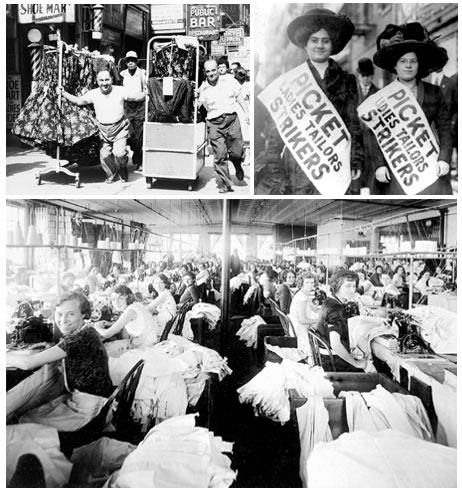
In reading a recent book, "Outliers:The Story of Success" by Malcolm Gladwell, I think I have found the answer. Mr. Gladwell tells the story of Mr. Borgenicht and his wife who started sewing aprons in their kitchen, and built a very successful business in the garment district of New York City. He describes in the following paragraph why Mr. Borgenicht was successful, and why he had "hope." Examining the field of medicine from the perspective that Mr. Gladwell examines the work of Mr. Borgenicht will help us expose the forces in medicine that taking hope out of our practices.

"When Borgenicht came home at night to his children, he may have been tired and poor and overwhelmed, but he was alive. He was his own boss. He was responsible for his own decisions and direction. His work was complex: it engaged his mind and imagination. And in his work, there was a relationship between effort and reward: the longer he and Regina (his wife) stayed up at night sewing aprons, the more money they made the next day on the streets... (my bold)Those three things-autonomy, complexity, and a connection between effort and reward-are, most people agree, the three qualities that work has to have if it is to be satisfying." Is practicing medicine satisfying these days? I would like to examine these three qualities in the practice of medicine: autonomy, complexity and connection between effort and reward.
How about autonomy. Physicians must pass Board Exams-I don't have a problem with that idea, but the exams are changing-every few years now, and they are now going to require continuous re-certification. I recently re-certified in cardio-thoracic surgery and the examination was effective, educational and enjoyable. I was treated like an adult, a professional. It was a take home exam which showed me a critique of the question after I tried to answer it the first time. After reviewing the critique (which contained the answer), I answered the question a second time. It was an educational process which I enjoyed even though I do not do most of the procedures I was queried about. Now, because of the increasing scrutiny of physicians, the exam will be a closed book exam that younger surgeons will have to travel to some hotel to take. Don't we have enough bureaucrats reviewing and checking on us at multiple levels? Ever hear of the "one hundred lives campaign?"
That's only one type of scrutiny. I haven't mentioned JACHO and its review on new doctors, and doctors private offices, and peer review, and CME requirements, and applications for privileges to hospitals, and even-if you can believe it- applying to be on an insurance company panel of "approved" doctors. If something bad happens in surgery, and it can happen, the review is never ending.

I once was placing a pacemaker in a very sick patient. She ended up doing alright, but during the case, she had a cardiac arrest. It was handled fine, and she survived without consequences. During her cardiac arrest,however, while I was resuscitating her, I actually thought, "I can't believe the bureaucracy I will have to go through if she dies!" What a confining and oppressive atmosphere in which to practice medicine. Autonomy is gone, and with it, any sense of professionalism that used to serve as the basis of a life of personal sacrifice for the patients. Are we going into medicine now as a "lifestyle" choice?
Mr. Gladwell's second requirement for hope in a vocation is complexity. I think all will agree that the physician's job is complex, but even the complexity is being threatened by intrusions of others into the daily work of the physician. Documentation has become so important in the field of medicine, that it is just about becoming medical care. At times, the patients seem to be getting in the way of this medical care, and if they would just go away, we could finish our documentation. Why so much documentation? It is done for legal and reimbursement reasons. It doesn't have anything to do with patient care.
In addition, we are told what to write. We can't say diabetes anymore, it has to be "type II diabetes," and anemia is now "blood loss anemia." Imagine controlling what a real professional must write, and how details must be written. Is that another limit on the ever disappearing reward of professional freedom?
Finally, their is a relationship "between effort and reward." There is none whatsoever. Third parties control this important aspect of any service relationship, and they have created systems that exist to decrease reimbursement to providers rather than fairly compensate the work of physicians. Most physicians don't know the details of the reimbursement, but they keep working harder, because they know that their income continues to drop while the bonuses of the third party administrators continues to increase.
I worry about medical care not so much because there are so many millions uninsured, and that most folks can't afford medical care, but I worry that the physicians and other "providers" are working in a field that does not satisfy Mr. Gladwell's requirements for a satisfying work environment. What does this portend for patients in the future? In a word, trouble. I think the relationship between the patient and the physician is dissolving. I think that in the future, there is a danger that when we are sick and vulnerable, and frightened, there will not be much of a connection with the person who is "in charge" of the decisions that will effect our life and limb. That does not bode well for our quest of "coverage for all."
James P. Weaver, M.D.,FACS
Tuesday, July 21, 2009
Our Brother's Keepers? Not Quite!

It looks as if ObamaCare is running into snags that may postpone or even stop the passage of this massive health care reform effort. It appears that now even the Democrats are balking at the projected expenditures. But on a purely social level, I think The People are having trouble accepting this idea. It is coming down to a question of exactly how much do we want to to be forced to help our fellow citizens?
This bill will eventually put all of us into the same health care system. After all, the "boss" has said that we are all going to have to "sacrifice" a bit to do this. But how much do we each have to sacrifice? And more importantly, how much are we each willing to sacrifice, and for whom are we going to sacrifice?
Most of us feel we sacrifice each day. We get up, go to work, and "put in our time." Most of us feel that work "gets in the way of living." If we are going to sacrifice, it has to be for a good cause, doesn't it? What then is a good cause?
How about sacrificing for the smokers who have puffed for 50 years and can't stay out of the hospital? And how about the "drugies" who get heart infections from using dirty needles, or even how about for those who eat themselves into enormity, and just can't walk across the room anymore? Do most of us believe that personal sacrifice is worth it for these problems? Don't kid yourself those who are "towing the line," and trying to make their lives decent and fruitful don't believe it is. That's one good reason why this idea is going to fail. The people don't believe it is fair.
I don't think most of us are willing to give to people who just don't try to take care of themselves. It is probably OK for those who run into unfortunate problems that are out of their personal control, because we all have this risk, and would want help if it happened to us.
Then there are more difficult questions. How about sacrificing for the 88 year old with cancer who continues on dialysis for months before death? How about continued feeding for a totally demented person who doesn't even know his own family? All personal choices that we will all pay for under this proposed systems. Why are these questions important? Because if the government (WE) is paying for health care, we will have to pay for these things. Do we want to?
Then there are the proposed taxes on the wealthy. Why should we single out the most successful people in the society, to pay for this. They are paying enough already aren't they? The upper 3% of tax payers pay about 60% of the taxes to start with. What is a fair tax anyway?
I don't think anyone should be forced through taxes to give more of their life to the government than anyone else. Why should one person have to work through May to pay taxes, and other people only have to work through February to pay theirs. I think it is morally questionable to take more "life" from those who have achieved the most in this society, and force them to work through May for the government. This is simply a case of class warfare, and it is not much different than "picking" on a group of people because of another unique characteristic like maybe the color of their skin!
This scheme raises too many questions about the fundamental relationship of our government to its people and the relationship of the people to each other. We are a people who believe in individuality and personal freedom. The collectivist concepts in this maneuver are difficult to sell to us. Thank God they are difficult to sell, for that implies that there may still be hope for all of us for a better future.
James P. Weaver, M.D.
Wednesday, May 13, 2009
Addition to "The Hospice Threat"
A recent conference in the Congress deals with the "threat" of Hospice becoming the rationer for the elderly. Listen to this Professor give his opinion about this issue. There are few ways out of this money crunch. Saving dollars from medical care means cutting somewhere, and the elderly are a good target! See this video:
See :"The Hospice Threat", this blog, January 19, 2009.
Thursday, March 26, 2009
Salary for Service: the Future Physician Payment Method

With all the talk of health care reform, I have been thinking about how physicians of the future are going to be paid. Obama says that we are going to control costs, and make the system more efficient. (Haven't we always been doing this?) The question I have is what will happen to the providers of care under this revolution. Anyone who reads the criticisms of the current system will see a peppering of the phrase "fee for service" with a quick mention of its detrimental influence on health care costs. "Fee for service encourages physicians to do more things to keep their incomes up."Anyone with common sense can see that this argument is irrefutable. It's just human nature. If you need to make a living, and who doesn't, the temptation will be there to do more things that will generate more income.
The classic argument against this proposal is that physicians are "professionals" and they have the good of the patient as their first duty. This argument doesn't hold a drop of water today. Look at the money making specialty hospitals, look at advertising, look at work schedules of many physicians, look at the way private physicians have turned away from the hospital care of their sick patients and placed them in the hands of the hospitalists. It doesn't take long to see that the standard of caring for OUR patient has fallen short of the ideal of self effacement for the good of the patient. Today, there is a looming question out there about the very existence of "professionalism" in the ranks of medicine.
Controlling costs, that's the most important aim of this health care revolution, and there is one major change that will accomplish this goal: Place all physicians on salary. A salary, no way! It's clear that this is going to happen. Examining the implications will make it clear.
First, this will eliminate the constant drive to do MORE to increase income. It will stop this incentive. Is it desirable for health care reform to "control costs?" You betcha!
Second, it will decrease the number of borderline cases that are done to increase income which drives up the cost of medical care for the nation. It will, to look at it another way, begin a system of surreptitious rationing. Does anyone believe that a sixty hour per week(future work rules) surgeon, on salary, will want to "invest" days and possibly weeks in a elderly patient with numerous co-morbidities and an "ify" prognosis? If I know human nature, it's just not going to happen. The argument to the patient will be," you're just too sick to have this operation." This type of interaction will ration care without anyone knowing.
All of these results are coveted by the health care reformers: less incentive to "produce," and less serious illnesses to pay for. Imagine the cost savings.
Many physicians are on salary already, and they will fall in line easily. It's the private doctors that will cause problems with implementation of this system. No doubt it will be a gradual movement of getting them into a corner and giving them no options when the "answer" of salary will become "apparent." Will it be eliminating the threat of malpractice litigation that will tip the balance? I can't be certain, but it will happen. It's too obvious.
In some ways, it will not be all that bad. Physicians can them relax, move into a different "life style" (a common phrase among younger physicians), and enjoy activities besides medicine. My guess is that the only problem these doctors will face is when they become the patient. By then, it will be too late.
James P. Weaver, M.D.,FACS
Monday, January 19, 2009
The Hospice Threat

They're building another Hospice in my town. I believe that makes about three relatively close to each other. That's the third one on about three years. It scares me. Why are we building these things so fast? Are we getting ready for something? I think we are, but no one's talking about it. I'm not even certain if anyone is thinking about it.
We are heading into a perfect storm in medical care in this country: 65+million baby boomers, general economic decline, and increased demands on our over burdened health care system. It's clear what is coming. We are going to ration much of what we did yesterday, because we don't have enough to spend on the elderly. Who will get the liver transplants in the future? Who will get the coronary bypasses in the future? I even wonder who will get their ruptured abdominal aortic aneurysm repaired tomorrow? The answer is, I believe, more obvious that many are willing to admit.
Residents are trained today to "control costs," and this effects the daily care all hospitalized patients receive. "Don't admit them if you can help it, and if you do, get them out fast!" That is the teaching mantra in today's teaching hospitals, and it is not about to end soon. It is only going to get louder.
Medicare is struggling to keep up with the expenses of the medical promises it has made to the people. It is the biggest entitlement threat to the federal budget. My guess is that the Federal Government will be forced to demand more taxes from every one's pay to support this system. Apparently, 23 percent of Medicare recipients consume 67 percent of Medicare spending, and 30 percent of this spending pays for care in the final year of life.
I have no problem with the idea of the "good death;" that is the idea that Hospice promotes. In many instances that goal is effectively accomplished. The problem is that there should be more concern that Hospice, under the current social conditions can easily become the socially acceptable alternative to appropriate care for the elderly.
Societies cannot always see clearly when individuals begin to act with the herd mentality, and I fear that is a possibility in our future. The picture of an environment with scarce resources, too many patients, and physicians that are too busy with too little of the traditional ethic of the "patient first" is developing before our eyes and we refuse to see it!
Physicians must become aware of this dangerous path, and begin the debate to maintain our obligation to our patients. There is nothing wrong with a bicameral system. In health care, the physicians must stay on the side of the patients. Let the administrators manage the expenses. We must side with the patients. The debate will be fruitful. Once doctors begin to manage the the health care dollar, we will lose the trust which is the glue that holds the physician-patient relationship together.
The patients that come to us are vulnerable, frightened, and in need. Their trust in our public promise to place each patient first, is not negotiable. If physicians forsake this promise their is no professionalism left in medical care, and physicians have become no different than merchants. There is no society that can tolerate this degradation of our professional ethic.
I have no problem with a Hospice system that is used properly. Physicians must remain aware of the danger of a Hospice that becomes the answer to our fiscal constraints. Proper medical care, and the patient first must not deteriorate.
James P. Weaver, M.D.
Subscribe to:
Posts (Atom)