Showing posts with label Medicare. Show all posts

Saturday, January 18, 2014

Seniors Beware: Medicare is in Danger

A recent article in the AARP Bulletin  asks the question, "Is Your Medicare Safe?"  In her article, Marsha Mercer, points to a section of the law which reads, "nothing in this act shall result in a reduction of guaranteed benefits."  This obviously was put in the act to mollify seniors with their great fear that Medicare may be gutted and taken away from them as a benefit. The mere fact that $716 billion are going to be cut from Medicare over 10 years does not seem to bother Ms. Mercer.

I agree that $716 billion  over 10 years will probably not place a significant dent in the benefits supplied through Medicare, as there is room for many readjustments in efficiency and provider reimbursement to probably satisfy this debt, but Medicare is not safe, and it would be best that future seniors understand how government functions.

When Medicare was passed by the Congress in 1965 there was a energetic debate about this new law. Various representatives claimed that "the government will control American Medicine, and tell people when they can go into the hospital and when they can't. It will tell physicians how much they can be paid for their services." The proponents of this law basically "solved" these objections by placing a first paragraph at the beginning of the new Medicare law that can be found by looking it up on various websites. This first paragraph was so important that  this law would not have passed without it, and the title of that first paragraph exposes both the methods and the direction of government control.

The title of the first paragraph was  "POHIBITION AGAINST ANY FEDERAL INTERFERENCE."  This particular paragraph was placed there to assuage the fears of conservatives that the government would control medical care in our country, but as we all know, the paragraph had nothing to do with future laws that were passed, or promises that were made about federal interference. The federal government currently controls at least 65 to 70% of medical care, and it does control how much physicians are paid, and who can go into a hospital and when they go home. The details of what else  it controls are too numerous to enumerate in this brief article,  but let's just say it controls just about everything.

Having a statement in the Medicare law of "nothing in this act shall result in a reduction of guaranteed benefits" is no different than saying, "Prohibition against Any Federal Interference,"  And this is been said before I are government specifically in 1965 with the passage of the Medicare law. In case you haven't read that paragraph I'm going to include it in this essay: "

PROHIBITION AGAINST ANY FEDERAL INTERFERENCE

Sec1801[42 U.S.C. 1395]  Nothing in this title shall be construed to authorize any Federal officer
or employee to exercise any supervision or control over the practice of medicine or the manner in which medical services are provided, or over the selection, tenure, or compensation of any officer or employee of any institution, agency, or person providing health services; or to exercise any supervision or control over the administration or operation of any such institution, agency, or person."

I hope you noticed that the paragraph begins with the statement "nothing in this title" and that is just what is included in the Affordable Care Act.

The basic idea is that governments say what they like and then do what they have to further down the line. They can always come up with excuses such as, "it's too expensive or it's causing too many unforeseen consequences, yada yada yada." The point is there is always an excuse and many times the people who passed the law are not present in government when they come up with a reason to change it.

Concluding that a brief statement in the Medicare law will protect us from further consequences is not only naïve but dangerous. It's giving elderly a false sense of security which is definitely not present the way the demographics are moving in this country.

The elderly are increasing and the number of workers to support our "benefits" is gradually decreasing. The promises that were made are not necessarily sustainable.

In a different sense it's not really fair for the elderly to base their retirement on the backs of younger people. Younger people have a right to the same opportunities that their parents and grandparents had when they were young. I worry that the tax situation in this country will only get worse for young adults if we continue down this same road to entitlements and Medicare is a big one.

There are serious questions anyway about the AARP's support of the affordable care act. It is my understanding that various executives in the AARP received government jobs after the passage of this law. Did this have anything to do with their support of the ACA? Those who believe that "nothing in this act show result in a reduction in guaranteed benefits" probably believe that there was no relationship between the nice cushy government jobs received by various AARP executives and  their support of the ACA.

I think changes are coming, and AARP would be wise to let seniors understand it. 

Wednesday, March 16, 2011

United States Code: Title 42,1395. Prohibition against any Federal interference | LII / Legal Information Institute

United States Code: Title 42,1395. Prohibition against any Federal interference | LII / Legal Information Institute

The above reference is the actual first paragraph of the Medicare Law which was passed in 1965. It is clearly an example of the extension of control that results when the Federal government "moves" into an area of public interaction. Even the title is, unfortunately, a lie: "Prohibition Against Any Government Interference. " Please follow the above link, and read the paragraph.

It is a fact, that the Federal government totally controls (or interferes) with the delivery of medical care. It controls admissions, discharges, payment to all involved, and rules, rules, rules. There are career ending "threats" if you don't obey these rules, and overall it has become an oppressive system for all "providers."

There are many reasons physicians are losing--or have lost-- their Professionalism, but the above departure from this earlier "promise" is pivotal. Society shouldn't want physicians to lost their distinction as "Professionals" for if they lose it, when someone is sick and in need of a physician's help their will be the feeling that you were treated with the same level of compassion as a customer ordering a hamburger at the McDonald's take out window.  Not a pleasant thought!

I think it is important that we remain vigilant  of this departure from government's original promises when Medicare was passed, and its eventual control of the system. Didn't we just pass a "drug benefit"?  Where will the "control"of the pharmaceutical industry be ten years from now and how will it affect the pharmaceutical industry. Keep your eyes open.

Wednesday, February 16, 2011

The Budget Battle, Can America Survive?

The dismal science (economics) is not my strong suit. Listening to the news recently, and reading newspapers has left me with a gigantic headache. Debt, deficit, 46 billion now, 75 billion later, interest on the debt, costs, and debt limit, are terms being thrown around in the current Congressional debate about how to get us out of this impending catastrophe. I did find something this morning, however,  which helped to clarify this mess we are in, and it needs to be shared with all of us.

It was written by David Malpass--a much smarter person than I--who presents some of these incomprehensible facts in a way that even I  became frightened because of where we are headed. His insight is in an editorial in today's Wall Street Journal, and is entitled, "After Obama's Budget, Republicans Need a New Strategy." After reading the article, the title is correct, because it is obvious that someone needs a strategy--new or otherwise even if we are forced to hear the truth.

Mr. Malpass (a deputy assistant Treasury assistant secretary in the Regan administration) reports that the federal government is "spending $300 billion every month...and of that $120 billion is borrowed." How's that for responsible management? He goes on to reveal ever more frightening figures:

Our debt limit is currently $14.3 trillion and will have to grow to over $26 trillion over 10 years as the government spends $46 billion and takes in $39 billion in taxes.  I can't believe it. He goes on to talk about the unrealistic assumptions that Obama's numbers are based upon.

His budget assumes that "real growth will climb from an already wishful 4% in 2012 to 4.5% in 2013, and 4.2% in 2014--despite plans for sweeping  tax increases." His wish-list also assumes that the Federal Reserve will keep interest rates low; wages and salaries will grow 6.6% per year in 2013 and 2014, and inflation will be only around 2%. Obama projects unemployment to remain about 6%-8% during this period. Mr. Malpass astutely points out that all these fanciful dreams will occur in an environment with "no recessions, no inflation, big tax increases, and no wars."

He reveals our violation of generational responsibility by relating that "there is talk that Washington wants to begin issuing 100 year bonds--the government gets the money now by promising that our great-great-grandchildren will pay it back." How's that for inter-generational Justice. Is anyone listening?

If we don't face up to this challenge, it seems certain that we will be in for an economic tragedy, and I'm not certain that we have the national will to avert this disaster. Let's face it, we are a 220 year old experiment. Can a government continue to thrive if encourages citizens to elect leaders based on how much treasure they promise to spend on them?  No one is even touching the biggest chunks of this budget crisis--Medicare, Medicaid and Social Security--at this point because maybe we won't vote for them next time around if they do. Do I see a fundamental flaw here?

On top of all this, it seems to me that no one believes that this is a real problem with real money. On an individual level each of us tries to manage our money carefully-- it is clearly ours, and we know it. If we're irresponsible, we feel the pain. On a national level, it's  no one's money because it belongs to everyone else. There seems to be a mind-set here of detachment from the consequences. Could anything be more potentially dangerous?

When the President's Debt Commission released it's report in December 2010, the public's reaction was appalling: Don't touch my benefits! It's apparent that we need leadership, and so far I haven't seen any. Republican's now have the opportunity to be leaders. Will they take the "chance" of telling the truth and risking their position of power in the next Congress. Let's hope so.

Saturday, January 30, 2010

The Physician's Vow of Poverty?

A recent editorial in the New England Journal of Medicine "Medicine's Ethical Responsibility for Health Care Reform" discusses Medicine's ethical obligations in the current battle for health care reform. Dr. Brody, the author, suggests that medical specialties come up with a top five diagnostic tests or treatments that are commonly ordered by members of a specialty that are expensive and show no meaningful benefit for the patient. I can't disagree with that idea for I have seen many tests-meaningful malpractice reform might change this- and procedures that don't seem to do much for the patient.

That is the essence of his paper, but he has slipped in a zinger at the beginning of his argument that deserves much further public debate.

He mentions the reform that health insurance companies and pharmaceutical companies have offered to hold down the cost of medical care, and then opines that physician support "has been made contingent on promises that physicians' income would not be negatively affected by reform."

He goes on to remind us that physicians have "sworn an oath to place the interests of the patient ahead of their own interests-including their financial interests." He also notes that none of the for profit health care industries that have promised cost savings have taken such an oath. Well, true enough, but medicine has not taken a vow of relative poverty either, and this deserves further discussion.

Physicians deserve to earn a good living just as the leaders of the pharmaceutical and insurance industries do. And no, they haven't taken such an oath. The millions they earn each year and the way their customers are manipulated and swindled is indisputable proof of that. Physicians earn more than most of us, so is it wrong for them to want to preserve their incomes?

In most clinical situations today, the financial relationship between the physician and patient is not material. Both parties have fallen into the paradigm that the third party controls this aspect of the relationship. Physicians have little leverage over reimbursement from third parties for the noteworthy work they do. Medicare typically pays about 30% of charges, and Medicaid pays worse. To make matters more inequitable, the "private insurers" tied their payments to Medicare over ten years ago in a exquisitely perceptive move to relentlessly lower their payments to physicians.

Over five years ago, the Annals of Thoracic Surgery published an article that dealt with the question of the "purchasing power of thoracic procedures." Their analysis by noted economists showed that the "purchasing power" from the income of thoracic procedures had decreased 50% over the preceding ten years. It has not gotten any better in the last five years, and it doesn't look like it will improve in the next five either.

Physicians are members of the "learned professions." We all know that the interests of the patients are primary, but physicians have financial obligations like everyone. I recently talked to a family doctor who owed over $200,000 in loans from her education. Don't physicians have families, and homes, and other expenses that we all have? Professional athletes commonly earn in the six figures, and many earn much more, and all they do is entertain us. How much is it worth to us to pay someone who will save our life?

I don't agree with Nancy Polosi about many things, but I do agree that the insurance companies (including Medicare) have strangled the economic rights of providers and patients while maintaining a comfortable margin of profit for themselves. This is why medicine must say that it wants to preserve its income when and if health care is reformed. Physicians believe that an inequitable portion of the proposed "cost saving measures" will come out of their pockets because they do not believe they have any significant leverage or clout in the negotiations. They have not had much influence in the past and the future doesn't seem any brighter.

On a one to one basis, I believe most physicians will treat their patients with understanding and respect when it comes to economic matters of reimbursement. Putting the third party in the middle of that relationship has damaged the basis of medicine's professionalism- our relationship with our patients. Preserving physician's income will help to reinforce the bond of service that physicians have promised by paying providers closer to what they are worth in the delicately intimate and consequential exchange the transpires in health care encounters.

James P. Weaver, M.D., FACS
Durham, N.C.

Sunday, August 2, 2009

Open letter to the American College of Surgeons

I have been a member of The American College of Surgeons since the mid 1970s, and have watched many decisions by this body that have lessened the professional standing of surgeons in our nation (American College of Surgeons, Where are you?,Mychasecuts,March 2009), but the current health care debate has revealed, unfortunately, another mistake in leadership of our organization that will have far reaching consequences for our collective futures as surgeons.

The College has recently acknowledged that they are supporting this "reform" because they need to have a "seat at the table." Apparently the College is afraid that if it is not "at the table" Congress will not hear its opinions on issues it believes are vitally important. It seems that the College does not understand or value history. First of all, what makes us believe that we can trust the Congress? History proves otherwise. The first paragraph of the Medicare law has a title: "Prohibition Against Any Federal Interference." Does anyone believe that the Federal Government has not interfered with the practice of medicine? Of course they have, and they intend, or rather they MUST continue to do so for Congress has no choice.

In order to stay in office, Congress makes rash promises to voters. This forces them to tell half-truths, and twist ideas while they promise these "gifts." There is no way they can afford these "gifts" as their promises, especially on health care, are economically unsustainable. They promise, however, because they wish to stay in power. In a sense, they are "forced" to lie! I cannot understand why the College fails to see this fundamental truth.

It is clear that our government is tampering with the lives and sweat, in essence the freedoms, of highly trained surgeons, and not considering the details of the "surgical lifestyle," market forces, work environment and need for a surgeon's hope for the future. Surgeons are small minority in this BIG problem of medical care delivery, and the Congress is certainly going to roll over our rights. They will do it slowly, but THEY ARE GOING TO DO IT! After all, is the ruthless intimidation that has been used to "force" us to come to their table the work of a group that will listen to our position?

The College should have refused to sit at a table with this bunch of bureaucrats that, history has shown, are going to smile, and wish us well, and then do exactly what they want to. They have flagrantly violated the promise of "prohibition against any Federal interference."

Does the American College of Surgeons really want to be part of this fiasco? The American people are not and have not been told the truth. Once this plan is in, and time exposes the certain draconian consequences, we will fare better if we are not a part the original planning. Won't we be blamed also if we are "at the table?"

The College surely knows that there are only two ways to control the distribution of any resource: price or availability. In countries where price is excluded by politics, and there is a nationalized system, availability is the means of control of expenditures. That explains why it takes three months to have a MRI in Canada. Do we want the same? It would be appreciated if our representatives would at least admit publicly that we will have to have many objectionable ways to control costs in their incipient system.

Finally, I cannot understand how the College is so far distant from my personal understanding of this movement (appropriate term). I have been a practicing surgeon for almost 40 years now, and have an excellent feel for the essence of medical practice. Where does the leadership get their understanding of the desires of the members? A survey would be helpful. Do they believe that they know so much more than the membership that they can diverge completely from the desires and understandings of the group?

Surgeons, in the past, have been trained to persevere and approach obstacles with quiet courage and unshakable fortitude. Where is this attitude in our current leadership? Have they stood before the Congress and told the TRUTH? I do not believe so. Is the palace of government so intimidating that we cannot articulate the necessity of our personal God given rights to this bunch of charlatans? If the College cannot do it, who then, will? How many of our personal rights are we going to sacrifice by slobbering up to the government trough of handouts? This will inevitably affect our behavior with our patients and with that our professionalism. May God help us all.

James P. Weaver, M.D.,FACS

Sunday, March 15, 2009

American College of Surgeons, Where Are You?


I have been a member of the American College of Surgeons for 30+ years, and I am still disappointed in its ability to defend the profession. Surgeons have lost any control of their work environment, and with that any true sense of a functioning professional. Where is the ACS on this issue?

In a previous article on this blog-A Problem with Patient Safety, Feb. 28, 2009- I explained how "patient safety" has taken a chunk out of professional freedom but that is not the only opportunity that has been squandered by the ACS (American College of Surgeons). In terms of "patient safety" I do not expect to hear a peep out of the ACS over the fact that I have discussed the absence of limits to the regulations over patient safety. In 2004, there were about 70 reports of "wrong site surgery" by the Joint Commission. My guess is that they included even wrong site anaesthetic blocks that were discovered and corrected prior to the surgery. They probably included "near misses." But the critical question is how many surgeries were done in the United States in 2004, and how far are we to go with the regulation of surgeons because of these few mistakes. My guess is that there is a baseline number of "wrong site surgeries" that will be done each year no matter how much control these many organizations impose. I do not condone mistakes, but I don't agree with regulations that are securing jobs for the regulators either. Where is the ACS on this issue?

Another area that illustrates the lack of attention to our professional freedom, is the ACS continued endorsement of regulations that disparage the profession. What does "pay for profession" mean anyway? I thought we were a profession, and that means that we do the best we can ALWAYS! Are they going to pay us more of we preform well? Does that mean that we don't do things well some of the time and we won't be paid as much for those procedures? The ACS should not agree to "pay for performance." Agreeing to this concept is disparaging to the principles of professionalism which the ACS is supposed to represent and protect. Where is the ACS?

Another example of "lack of fortitude" are the recent "should never happen" Medicare rules. Medicare is only looking for reasons not to pay for the work of physicians. Now, I can understand they will not pay for an instrument left in the patient, that makes sense. But what about mediastinal infection after heart surgery? This is clearly an attempt to enter a new area of "denial of payment." Where is the ACS?

I have been involved in hundreds of operations, and infections just happen. The rules are strict, and carefully applied, and IN SPITE of all the precautions, infections occur. It's clear that Medicare has added this exclusion to test our response. The ACS response should have been the same as mine: "Infections can occur in spite of rigorous precautions, and it is unacceptable to include mediastinal infection after heart surgery in this scheme." The ACS should mention the fact that Medicare attempts to withhold payment mainly because of their own budgetary constraints, but history predicts it will not be part of the discussion because the ACS will not bring it up. Where is the ACS?

I could add more, but finally, the Medicare reimbursement system. The ACS should go to Washington and tell them that there is no integrity in this system. The resource based relative value scale does not contain any mention of "value" to the patient. It's value that people pay for when they purchase any product. The RBRVS is a blatant lie, used to control the costs of the promises that the government cannot afford. The ACS should let Washington know that physicians have no trust in the determination of the "value" of their services because the government has a conflict of interest in determining this "value." Currently it has enslaved physicians, and is ruining the profession. It does not look good for the future of patient care under Medicare. Where is the ACS?

Another area that has had "no comment" from the ACS has been re-certification. Physicians are re-certified at all levels these days. The hospitals, the insurance companies, our societies, the state boards, the specialty boards all have a part in re-certification. Isn't that enough? Has the ACS stood up for surgeons, and stated that we have so many organizations and review groups watching us that re-certification is not necessary anymore. Where is the ACS?

American College of Surgeons, please reevaluate, and begin to take an active role in defending our profession.

James P. Weaver, M.D., FACS

Saturday, February 28, 2009

A Problem with Patient Safety?

Don't think I'm about to write that patient safety is the best thing that ever happened to medical care. I'm not. I think it might be useful sometimes, and is occasionally a reasonable addition to procedures in medicine, but the problem with "patient safety" is that there are NO LIMITS to its implementation.

All this patient safety began around the time of the publication of the book, To Err is Human. It was published by the Institute of Medicine in 1999. There had been rumblings about safety before that, but that book began the major onslaught of regulations. JACHO, CMS, state agencies, leap frog, medical board organizations, insurance companies and others, too many to count,began to apply their own regulations to support the growing idea that the doctors were dangerous and needed to be controlled! After all, doctors kill over 100,000 patients/yr. with mistakes.

First of all, I'm not certain that figure is accurate. I have been in medicine for over 30 years, and I can barely remember deaths caused by errors. Is giving the "wrong" antibiotic prior to culture results a mistake; is an incisional hernia a mistake; is an infection after surgery a mistake (even in a malnourished patient); is a heart attack after a below knee amputation a mistake? These numbers added up, and fed the final conclusion of 100,000. These numbers are based on research done in the 1980s to discover why there were so many malpractice suits, and I have questions about these statistics. It sounded good, and this conclusion opened the door to control and regulation of doctors with no limits. After all, who can speak up against "patient safety?" Not me!
But there is problem with this crusade. "Outsiders" have been given authority to manipulate and control all aspects of physician behavior to the extent that any semblance of professionalism is being decimated. Professionalism includes the concept of PROFESSIONAL FREEDOM, and this has disappeared in medical practice. CMS demands some of these rules because of payment constraints, but they all jumble together to control the day to day behavior of physicians. Do they really believe we are trying to make errors? It just happens decisions in medical care are difficult, and that's why we used to be paid well for our work.

The words we use in our "private patient charts," the details of behavior in the operating room, the "time out," the concept of patient consult versus evaluation, instrument and sponge counts on cases with incisions only 3 centimeters long; updating a physical exam prior to surgery, re-dating the operative request;signing verbal orders within 24hours, dictating operative notes within 24 hours, and not to mention the continued devaluation of our services through reimbursement reduction, are just a few examples of the ever increasing infringement on professional liberty that physicians are forced to endure. Are these checks useful? Maybe some of them, we don't truly know. One thing, however, is for sure: they are selecting a certain type of physician who will practice in the future in this oppressive environment. This "new" doctor will be the type who will not live a life for medicine or for the patients. Medicine will become a job, a supplement to a "lifestyle" which offers time off, reasonable payment, time for family, and time for other "more important" activities. As long as these doctors follow the RULES, and stay under the radar of the regulators, they can continue to work at their job. Fortunately, it was not a job in the past, it was a profession.

Surgeons are now required to do a "time out" prior to operation. I have never operated on the wrong patient or wrong side in 30 years. But we are now required to mark the site prior to surgery, have the request signed before surgery, and discuss the site of surgery before we do it. I am surprised that we are not required to turn around three times after the "time out" and do it again to make sure we have the right patient!

If the specialty organizations-American College of Surgeons, American College of Physicians, American College of Cardiology, etc.- do not begin to speak up against the continued oppression of physicians, and begin to demand some reasonable limits to these oppressive regulations, I fear the patients of the future will be treated by physicians who are not particularly concerned or motivated to get the best for each patient. These new physicians will be a "physician bureaucrat" who is enforcing the RULES of "the system." I do not believe this is a bargain society wants. There can be no profession without "professional liberty." Professional behavior and motivation depends upon it.

James P. Weaver, M.D.

Friday, February 6, 2009

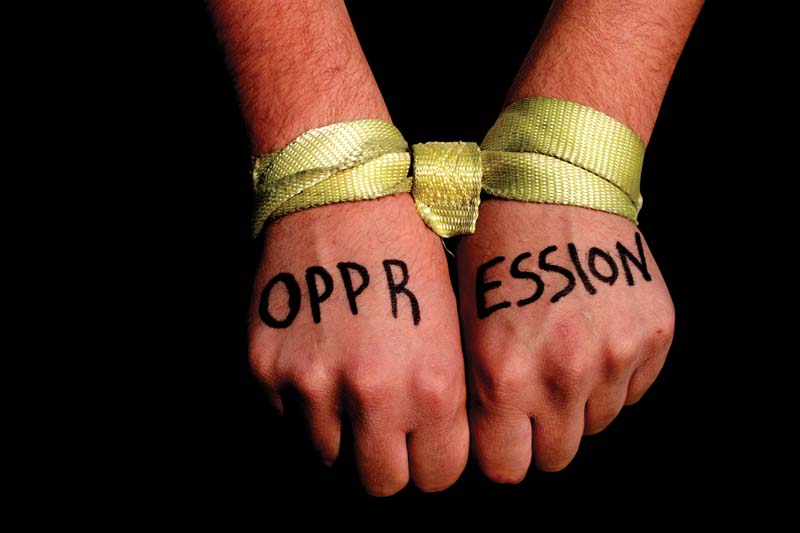
Medical Care Oppression

I know most people think physicians have a pleasant professional life, but that is not true. The current atmosphere in the medical world is not a happy world. Most physicians do not advise there children to go into medical fields, and that is a tragedy. A practicing physician, around 40 years of age, should believe that practicing medicine is the best thing to do, and that nothing else would be better.

Doctors today feel oppressed, and Medicare is the major offender. Medicare tells doctors how much time to spend with patients; what they should write in the hospital and in their own private charts; who they can admit to the hospital; how much they will be paid for their labor; and all these directives are done with the constant threat of large fines and imprisonment if these "rules" are not followed. All of these rules apply even though the government promised that there was a "prohibition against any Federal interference" in the first paragraph of the original Medicare law.

Medicare has forced "Professionalism" out of medicine. It cannot pay for all the promises made to the people, and it continues to decrease reimbursement, and increase rules. Fifteen years ago, most doctors believed that they were being paid a reasonable wage for the work they were doing. Today, I and most other doctors believe we are not much more than controlled servants. We work hard for our wages, with difficult patients, taking risks that are not adequately reimbursed. Many services we deliver are "covered" under the "global" coverage of indentured servitude. Global coverage is a method that Medicare uses to force physicians into patient care situations that extract free work from physicians. It is all too common.

I have begun to wonder about the response of people that are forced into a system that they believe has no integrity. I think that doctors believe that Medicare has no integrity or honesty in its dealings with physicians. It continues to unilaterally cheat the providers with its many rules and restrictions. That cannot but encourage behavior in doctors which will not be helpful to patients.

I am searching the business literature for studies on this topic(how people behave in an environment that they believe is unjust), but have not found much yet. I intend to write about it later. How does someone behave when forced to work under a system that one believes has no justice? Why is it the malpractice rates keep going up, but reimbursement keeps decreasing? Are we doing something that is dangerous, but not worth much? I believe this system is not healthy or nurturing to the profession of medicine, and the social consequences have yet to be examined.

More to follow.

Dr. Weaver