Marine Corporal JB Kerns was injured in Afghanistan on April 7, 2011. He was on his third tour there, when his vehicle was struck by a road side bomb. He was
lucky to survive, but lost both legs, and the lower half of his right arm in the explosion. He had been at Camp Lejeune waiting for the return of his unit, but was set to come home, to Ararat, Virginia today.
Arrangements had been made for the Patriot Guard to meet him in Pinnacle, North Carolina, and to escort him from there to Ararat. It was certain that a good percentage of the town would be there to greet him. He is a home town Hero.
Over two hundred bikes showed up in Pinnacle to meet him, and a thoughtful Highway Patrol officer had arranged for a police escort and road blocks for our caravan of bikers as we escorted JB through Mt. Airy, North Carolina, to his home coming. What a sad and happy day. Sad because of JB's injuries, but happy because he made it through alive, and has gained all the respect, honor, and love of his town, his country, and of those who know his story.
When he arrived in Pinnacle in a van, he got out and greeted the waiting crowd. All of the two hundred plus of us wanted to shake his hand, hug him, and thank him
for his service, and most of us did. As his van finally pulled out, the bikers revved up their engines, and formed a staggered formation for the 25 mile trip through Mt. Airy and on to Ararat.
Along the route, people were clapping, saluting, holding flages and waving for JB, and cheering us as we rode along. It was a rousing display of appreciation and honor for JB, and a remarkable show of patriotism. You see, JB is the real thing. He is a living testament to the sacrifice that our military makes for us every day to preserve our freedoms, and the people along the route demonstrated that there are people out there that really understand this, and care deeply about it. They took their Sunday afternoon to pay respect to a Marine hero; a soldier that we all owe something to for his service to our country.
It's was good to see this demonstration of patriotism, and it brought tears to my eyes, because I love our country too. JB went home today, but he brought home for all of us the meaning of military sacrifice.
It would be nice if the world were a friendly place, but it clearly is not. Unfortunately, we need young men and women to defend our freedoms, and carry the message of that freedom into the world. JB has done that with honor, and he has shown all of us his tennacity and courage in doing so.
Today, Marine Corporal JB Kerns had somewhere between 500 and 1000 supporters today there in Ararat, Virginia, and with the evening news reports that will air tonight hundreds more, in the comfort of their homes, will get the chance to share in the joy of an American hero who teaches all of us a most precious lesson in Patriotism. Thank you and God bless you JB, and God bless America.
This blog will continue to comment on the state of American Medicine, but I will now widen the scope of my comments. Politics, culture, and the nature of many things are now open for discussion as we move into the future together.
Sunday, September 25, 2011
Tuesday, September 6, 2011
A Santa Clause Government: Seeds of Destruction?
A recent Associated Press article in my local newspaper, "Labor unions adjust to new reality under Obama," generated numerous thoughts which I feel are worthy of comment. The article opines that labor forces face continued fights for
survival in high profile battles notably in Wisconsin and Ohio. In addition, it mentions that union leaders are disappointed that Obama has not produced jobs promised, and quotes Larry Hanley, president of the Amalgamated Transit Union as saying, "Obama campaigned big, but he's governing small."
So what is the problem? As an outsider to this conflict (I'm retired), I'm aware that the National Labor Relations Board is preventing Boeing from opening a new plant in South Carolina because it claims Boeing is going into a "free to work" state to halt union power. Unions have also gotten exemptions with the Health Care Afford ability Act, and Obama has spoken out against Wisconsin Governor's efforts to control union power in his state. What more do they want? They want it all! It's human nature, and once one becomes dependent on benefits, it is difficult to relinquish them.
This problem, of complaints of inadequate government benefits, will only get worse in the future because of the delicate role our Federal Government has assumed over the past 80 years. Beginning with the New Deal, our government entered into new areas of social regulation by "providing" benefits for various social misfortunes. Beginning with Social Security, these efforts have ballooned into a panoply of benefits ranging from medial care to home care, to special "exemptions" from numerous government oppressive requirements, farm benefits, and on and on and on. Our government has essentially positioned itself in the middle of distribution of property between different factions of public life. Unfortunately, this activity will only generate anger from both groups: the receivers will want more, and the "givers"--by force of government taxation-- will feel abused.
It is apparent why, over time, this would happen. People always have problems and
trouble. I am not denying that government may need to help under certain defined circumstances, but their needs to be some restraint on this spending because our system encourages it. Life is riddled with difficulty. Our "representatives" get elected to positions of power by promising help and benefits to constituents, and over time, with continued growth, this "temptation" in our system has begun to show its flaws. Government always pays for "benefits" with other people's money, and the lack of personal responsibility with this vicarious spending leads to financial debt. Benefits are only increasing and that will continue unless the system is challenged.
Particularly vulnerable to these "defects" in our type of government are the public service unions. The chart above shows the growth of public service unions. Better benefits, pensions, salaries, and other perks are the earmark of this type of employee-government relationship. It is one of the reasons that California is sliding into a financial sewer. Wisconsin is trying stop this trend, and the Governor's efforts have generated predictable union responses.
It is pathetic that the forces of maintaining this status quo in government have persisted in labeling the Tea Party with disparaging and vulgar terminology. It is the main force working to stop this spending trend. Liberals can't see their ideas--or don't want to-- and will persist in continuing to spend other peoples money at unsustainable levels. The Greecification of the United States is not far ahead unless we change our ways. Spending must be curtailed if our form of government is to survive.
I tend to view our 200+ year old government as a social experiment. Oh, we have some good features: Rights of the individual, the Bill of Rights, and the Declaration of Independence. But we have yet to discover, or openly admit our "Achilles heel": the government doling out of benefits to factions that realize they have the keys to the treasury because they obtain a majority status. The baby
boomers have not yet reached full voting power--it takes time for people to wake up-- but when they do, it will test our nation down to its very foundations. Will we all continue to vote for "our share" of the national giveaways, or submit to a reduction of these incipient self destructive schemes. I believe the 2012 may be a bellwether for our future.
So what is the problem? As an outsider to this conflict (I'm retired), I'm aware that the National Labor Relations Board is preventing Boeing from opening a new plant in South Carolina because it claims Boeing is going into a "free to work" state to halt union power. Unions have also gotten exemptions with the Health Care Afford ability Act, and Obama has spoken out against Wisconsin Governor's efforts to control union power in his state. What more do they want? They want it all! It's human nature, and once one becomes dependent on benefits, it is difficult to relinquish them.
This problem, of complaints of inadequate government benefits, will only get worse in the future because of the delicate role our Federal Government has assumed over the past 80 years. Beginning with the New Deal, our government entered into new areas of social regulation by "providing" benefits for various social misfortunes. Beginning with Social Security, these efforts have ballooned into a panoply of benefits ranging from medial care to home care, to special "exemptions" from numerous government oppressive requirements, farm benefits, and on and on and on. Our government has essentially positioned itself in the middle of distribution of property between different factions of public life. Unfortunately, this activity will only generate anger from both groups: the receivers will want more, and the "givers"--by force of government taxation-- will feel abused.
It is apparent why, over time, this would happen. People always have problems and
Particularly vulnerable to these "defects" in our type of government are the public service unions. The chart above shows the growth of public service unions. Better benefits, pensions, salaries, and other perks are the earmark of this type of employee-government relationship. It is one of the reasons that California is sliding into a financial sewer. Wisconsin is trying stop this trend, and the Governor's efforts have generated predictable union responses.
It is pathetic that the forces of maintaining this status quo in government have persisted in labeling the Tea Party with disparaging and vulgar terminology. It is the main force working to stop this spending trend. Liberals can't see their ideas--or don't want to-- and will persist in continuing to spend other peoples money at unsustainable levels. The Greecification of the United States is not far ahead unless we change our ways. Spending must be curtailed if our form of government is to survive.
I tend to view our 200+ year old government as a social experiment. Oh, we have some good features: Rights of the individual, the Bill of Rights, and the Declaration of Independence. But we have yet to discover, or openly admit our "Achilles heel": the government doling out of benefits to factions that realize they have the keys to the treasury because they obtain a majority status. The baby
boomers have not yet reached full voting power--it takes time for people to wake up-- but when they do, it will test our nation down to its very foundations. Will we all continue to vote for "our share" of the national giveaways, or submit to a reduction of these incipient self destructive schemes. I believe the 2012 may be a bellwether for our future.
Saturday, August 27, 2011
Attending Seal's Memorial in Virginia Beach: An Honor
August 25, 2011 was the date of the Seal's Memorial held in Virginia Beach. I wanted to attend, even though I had other responsibilities at home in Durham, North
Carolina. My meeting didn't end that night at the hospital until after 8pm, so I hurried home to northern Durham, and mounted my already prepared motorcycle for the first leg of the journey.
Riding at night is something I don't like to do. Vision is not always the best, and if you go fast enough (I'm not exactly certain how fast that is) you can "over-ride" your light, and not have adequate distance to stop before a collision. Anyway, as usual with these "missions," this was an important one for me, and I was determined to make it there to pay my respect to these brave soldiers.
As I made it to Interstate 85, and gunned it up to about 70mph, I took a good look around--it was dark (and fortunately not a stormy night)! I worried about that, but compensated with some EXTRA vigilance. The one advantage was that there weren't many cars on the road at that time, so I didn't have to watch out for the careless driver. I always follow the rule that "they don't see me" and I think that's a good rule. But at night, it's not the drivers I worry about. It's the animals!
I only saw a couple of deer on the side of the road on my way up--I spent the night
in Emporia, Va.--and they seemed to stay there because of the noise my bike made. Found a Sleep Inn, and hit the sack about 11pm.
I knew the next morning was going to be an early one, as the "briefing" for the mission to the Memorial was going to be at 7am, so I got up at 5, and prepaired to leave at 5:30. The ride should take about 1 and 1/2 hours according to my GPS, and if I pushed it a bit, I might even get there a bit early.
On the road that morning it was still dark, but I was riding east, and I could see the dawn beginning to develop as I rode along US 58. There are numerous police along this road, so I had to be careful. Heading into the populated area of Va. Beach, heightened my awareness because of all the drivers on their way to work: in a hurry, talking on the phone, listening to the radio, and dreaming of their day's work ahead. Again, "they just don't see me."
They had changed the place of the staging the night before to a Big K parking lot on 1st Colonial Drive, and when I approached that location, I was pleased to see a mass of motorcycles. I pulled in and listened as the mission was described.
There is always an emphasis on safety with these missions because no one wants any accidents and riding with a line of 100+ motorcycles through an urban environment has its hazards. I later found out that the final location for the Memorial was kept "secret" until just prior to the event. I'm not certain why, except the possible risk of a demonstration-- by the Kansas wackos or someone else that does not understand the sacrifices of our military and the sensitivities of family members caught in such tragedies.
Once the briefing was completed, we mounted up and left for the convention center in Virginia Beach. Pulling onto the main drag in front of this massive building, the 1000 sailors from the aircraft carrier Theodore Roosevelt presented a magnificent spectacle: standing at attention about three feet apart along the curb with their smart navy blue dress uniforms. We parked our bikes, and dismounted, forming a like line on the opposite side of the street with each of us holding a 3x5 American flag.
As I stood there, pondering the enormity of this event, I couldn't but help to think about the many aspects of this experience. Studying the uniforms of the sailors, I became aware of the many decorations (red stripes, green stripes--not certain what they are actually called-- different hats, different stripes on different locations on their uniforms and insignias on their sleeves). I have never been in the military, but it was clear that each person in the military knew the rank of everyone they ran into simply by what they were wearing. Everyone had their "place" in this system, and that, I believe, gives it a special sense of social order; something needed when you are in combat.
It civilian life we "try" to do the same thing, don't we? We do it by the clothes we wear, or the jewelery we wear, or the car we drive, or where we live, or the big one is what we DO! But when you finally come down to it, it doesn't get to the most important part of each one of us, and that's what we ARE--What is our moral compass, our sensitivities, our emotions, our personality. That's all that is important in the end isn't it.
I was honored to go there and stand for these heroes. I was fortunate enough to
receive a copy of the program for the service. It is sad to read. Each one of these heroes was very highly trained, young, highly decorated, and from my perspective represented the best and the brightest that our military has to offer. They left many children without a father, and wives without a husband, and they were young enough, that they left parents without a son. What a sad, sad loss. I was glad I took the time (glad I had the time) to go there and pay my respects in any way I could. I hope we all take the time to do that in our own way.
I have thought about these deaths now in some detail, and obviously, I don't know all the facts, but from my perspective, this catastrophe could be avoided by following one simple rule: "don't put all your eggs in one basket."
Now I'll admit that I don't know how urgent the need was for reinforcements, and what was available to accomplish this goal, but next time it might be wise to send them in in smaller helicopters, one at a time, to see what the situation is. My guess is that that's being considered.
My readers don't have the program for the Memorial as I do, and you can't read about these individuals that were taken in this accident. I can only tell you that they don't make 'em any better. God bless them and their families and all our thanks, gratitude and respect to them and their families for their ultimate sacrifice for all of us.
Carolina. My meeting didn't end that night at the hospital until after 8pm, so I hurried home to northern Durham, and mounted my already prepared motorcycle for the first leg of the journey.
Riding at night is something I don't like to do. Vision is not always the best, and if you go fast enough (I'm not exactly certain how fast that is) you can "over-ride" your light, and not have adequate distance to stop before a collision. Anyway, as usual with these "missions," this was an important one for me, and I was determined to make it there to pay my respect to these brave soldiers.
As I made it to Interstate 85, and gunned it up to about 70mph, I took a good look around--it was dark (and fortunately not a stormy night)! I worried about that, but compensated with some EXTRA vigilance. The one advantage was that there weren't many cars on the road at that time, so I didn't have to watch out for the careless driver. I always follow the rule that "they don't see me" and I think that's a good rule. But at night, it's not the drivers I worry about. It's the animals!
I only saw a couple of deer on the side of the road on my way up--I spent the night
in Emporia, Va.--and they seemed to stay there because of the noise my bike made. Found a Sleep Inn, and hit the sack about 11pm.
I knew the next morning was going to be an early one, as the "briefing" for the mission to the Memorial was going to be at 7am, so I got up at 5, and prepaired to leave at 5:30. The ride should take about 1 and 1/2 hours according to my GPS, and if I pushed it a bit, I might even get there a bit early.
On the road that morning it was still dark, but I was riding east, and I could see the dawn beginning to develop as I rode along US 58. There are numerous police along this road, so I had to be careful. Heading into the populated area of Va. Beach, heightened my awareness because of all the drivers on their way to work: in a hurry, talking on the phone, listening to the radio, and dreaming of their day's work ahead. Again, "they just don't see me."
They had changed the place of the staging the night before to a Big K parking lot on 1st Colonial Drive, and when I approached that location, I was pleased to see a mass of motorcycles. I pulled in and listened as the mission was described.
There is always an emphasis on safety with these missions because no one wants any accidents and riding with a line of 100+ motorcycles through an urban environment has its hazards. I later found out that the final location for the Memorial was kept "secret" until just prior to the event. I'm not certain why, except the possible risk of a demonstration-- by the Kansas wackos or someone else that does not understand the sacrifices of our military and the sensitivities of family members caught in such tragedies.
Once the briefing was completed, we mounted up and left for the convention center in Virginia Beach. Pulling onto the main drag in front of this massive building, the 1000 sailors from the aircraft carrier Theodore Roosevelt presented a magnificent spectacle: standing at attention about three feet apart along the curb with their smart navy blue dress uniforms. We parked our bikes, and dismounted, forming a like line on the opposite side of the street with each of us holding a 3x5 American flag.
As I stood there, pondering the enormity of this event, I couldn't but help to think about the many aspects of this experience. Studying the uniforms of the sailors, I became aware of the many decorations (red stripes, green stripes--not certain what they are actually called-- different hats, different stripes on different locations on their uniforms and insignias on their sleeves). I have never been in the military, but it was clear that each person in the military knew the rank of everyone they ran into simply by what they were wearing. Everyone had their "place" in this system, and that, I believe, gives it a special sense of social order; something needed when you are in combat.
It civilian life we "try" to do the same thing, don't we? We do it by the clothes we wear, or the jewelery we wear, or the car we drive, or where we live, or the big one is what we DO! But when you finally come down to it, it doesn't get to the most important part of each one of us, and that's what we ARE--What is our moral compass, our sensitivities, our emotions, our personality. That's all that is important in the end isn't it.
I was honored to go there and stand for these heroes. I was fortunate enough to
receive a copy of the program for the service. It is sad to read. Each one of these heroes was very highly trained, young, highly decorated, and from my perspective represented the best and the brightest that our military has to offer. They left many children without a father, and wives without a husband, and they were young enough, that they left parents without a son. What a sad, sad loss. I was glad I took the time (glad I had the time) to go there and pay my respects in any way I could. I hope we all take the time to do that in our own way.
I have thought about these deaths now in some detail, and obviously, I don't know all the facts, but from my perspective, this catastrophe could be avoided by following one simple rule: "don't put all your eggs in one basket."
Now I'll admit that I don't know how urgent the need was for reinforcements, and what was available to accomplish this goal, but next time it might be wise to send them in in smaller helicopters, one at a time, to see what the situation is. My guess is that that's being considered.
My readers don't have the program for the Memorial as I do, and you can't read about these individuals that were taken in this accident. I can only tell you that they don't make 'em any better. God bless them and their families and all our thanks, gratitude and respect to them and their families for their ultimate sacrifice for all of us.
Friday, August 19, 2011
Stuff
I retired this past January. Recently, I realized that I needed to retire, not because I as tired of my job, or, fortunately, not because of illness, but because I needed time to manage all the STUFF --I haven't even mentioned my wife-- I have accumulated over my
68 years of living.
All of us accumulate stuff as we go down the road. Books are a big one. I think we have enough books in our house to make the foundation sink a couple of inches each year. I have imagined our second floor collapsing and crushing the contents of our first floor--might solve a few problems wouldn't it? It's hard to get rid of books. You just might need that one in the future even though you have not looked or thought about it for 10 years. It's just too difficult to throw them away.
There is something sacred about books, and anyone who has a modicum of respect for academics will understand that designation. Even if you are desperate for extra space you can never burn a book as that conjures up images of the Nazis, and no one with the tiniest bit of understanding of history would welcome that label. So you might try to sell them, and lug them to the library for donation, or place them in your garage--bad idea--or loan them to other people. "Would you like to borrow my copy of Wood Carving for the Amateur?" Thank God for ebooks.
But remember, books are just one type of stuff. There are many others. There's furniture (a difficult one to get rid of because styles change), and tools, and souvenirs, and ridiculous pictures you took on trips, and 50 pairs of shoes (wife's problem), and your old underwear (lets stop there).
Because we moved to the "country" about 6 years ago, I had to buy a truck. You can't live in the country and not own a truck. I had never owned a truck, and I discovered that when you drive one, you feel like you are accomplishing something. What, I don't know, but you just get that feeling, and it's good. Besides that satisfying feeling I got, I realized that a truck is part of the passage of life: you grow up, get married, move into a bigger house, possibly move again, and accumulate stuff. At that stage, it's time for a truck so you can move your stuff around. Forget moving it around in your house, you can now move your stuff around the country. That's living.
Over the past few years, as I have accepted my aging, and become aware of my accumulated stuff. I have begun to imagine that the pattern of life may be the gradual accumulation of stuff. At some point, as one gets old enough, one just doesn't have the strength to even get rid of all your stuff, and you just have to wait until you die; then someone else has to get rid of your stuff. It's going to be easier for them though, because they don't have all those "attachments" that you have. Oh, they will have some attachments maybe to your old high school yearbook--if they can recognize you in any of the pictures--but as they climb over
your mountain of stuff, those "attachments" will rapidly evaporate. Anyway, the longest that "attachment" will last is one more generation anyway, then they will certainly get rid of your stuff. They might even burn some of it.
One rule to help me get rid of stuff has been if I haven't used something for at least 5 years, I should seriously consider getting rid of it. Oh, maybe that will be 10 years as it's a little easier on one's psyche.
There was someone who didn't have to consider any of these issues, and that was the Pharaohs of Egypt. When they died and were buried, all there stuff was buried with them (I think sometimes including wives and pets). Some might think that was a mark of privilege, but I don't think so. I think the problem with that "privilege" is that they still didn't get rid of their STUFF!
68 years of living.
All of us accumulate stuff as we go down the road. Books are a big one. I think we have enough books in our house to make the foundation sink a couple of inches each year. I have imagined our second floor collapsing and crushing the contents of our first floor--might solve a few problems wouldn't it? It's hard to get rid of books. You just might need that one in the future even though you have not looked or thought about it for 10 years. It's just too difficult to throw them away.
There is something sacred about books, and anyone who has a modicum of respect for academics will understand that designation. Even if you are desperate for extra space you can never burn a book as that conjures up images of the Nazis, and no one with the tiniest bit of understanding of history would welcome that label. So you might try to sell them, and lug them to the library for donation, or place them in your garage--bad idea--or loan them to other people. "Would you like to borrow my copy of Wood Carving for the Amateur?" Thank God for ebooks.
But remember, books are just one type of stuff. There are many others. There's furniture (a difficult one to get rid of because styles change), and tools, and souvenirs, and ridiculous pictures you took on trips, and 50 pairs of shoes (wife's problem), and your old underwear (lets stop there).
Because we moved to the "country" about 6 years ago, I had to buy a truck. You can't live in the country and not own a truck. I had never owned a truck, and I discovered that when you drive one, you feel like you are accomplishing something. What, I don't know, but you just get that feeling, and it's good. Besides that satisfying feeling I got, I realized that a truck is part of the passage of life: you grow up, get married, move into a bigger house, possibly move again, and accumulate stuff. At that stage, it's time for a truck so you can move your stuff around. Forget moving it around in your house, you can now move your stuff around the country. That's living.
Over the past few years, as I have accepted my aging, and become aware of my accumulated stuff. I have begun to imagine that the pattern of life may be the gradual accumulation of stuff. At some point, as one gets old enough, one just doesn't have the strength to even get rid of all your stuff, and you just have to wait until you die; then someone else has to get rid of your stuff. It's going to be easier for them though, because they don't have all those "attachments" that you have. Oh, they will have some attachments maybe to your old high school yearbook--if they can recognize you in any of the pictures--but as they climb over
One rule to help me get rid of stuff has been if I haven't used something for at least 5 years, I should seriously consider getting rid of it. Oh, maybe that will be 10 years as it's a little easier on one's psyche.
There was someone who didn't have to consider any of these issues, and that was the Pharaohs of Egypt. When they died and were buried, all there stuff was buried with them (I think sometimes including wives and pets). Some might think that was a mark of privilege, but I don't think so. I think the problem with that "privilege" is that they still didn't get rid of their STUFF!
Saturday, August 13, 2011
Thoughts on South Shore High School's 50 Year Reunion
A little over two weeks ago, I attended a 50 year high school reunion. I flew up to Chicago with my wife for the week end, and attended a Friday night dinner for the January class (about 120 graduates in 1961), and a Saturday night dinner in the city
which included the June class (about 350 graduates in 1961). I have pondered this experience for two weeks now, and have wondered what I might record as pertinent observations about this unique experience.
Well, I have been spurred on by an email I received today. It was a well written article by someone who hated high school. Thick glasses, braces on her teeth, and a poor social life made her feel marginalized from the joys of others, and she debated whether or not to go to her 50th, but finally chose to attend.
Fortunately for her, her recent experience was the antithesis of her torture some 50 years ago. She received complements about her current appearance and even her social participation in that long forgotten experience of adolescent formation. I would like to add some different comments from another perspective about this deep-reaching experience.
I, and, I believe many of my friends, had a glorious experience in high school. Looking back, I can only say, we were fortunate, and had each been given many gifts (the kind we may get throughout life if we are "lucky") that propelled us into the arena of enjoyment and fulfillment. For this I am profoundly grateful. Sports, academics, social life, and spiritual development were blossoms that yielded an abundance of fruit that nourished me into my future.
I must admit, that all of this was dependent upon the people I was with and good fortune. South Shore was an idyllic environment, full of resourceful people with vivid imaginations and dogged determination to push ahead into the always uncertain future. There was no drug problem, no excessive violence, and no weapons, and we didn't know White Castles might give us atherosclerosis--I still miss them in North Carolina. There was, at that time, a spirit of astounding personal growth that pointed many of us towards a future of what we believed was unlimited opportunity. This was not to come as a given, but our work ethic was developed by this environment, and we knew that it would only materialize if we continued down a road of continued diligence.
Returning to the reunion, these impressions were reinforced by the "successful" and well rounded (not referring to our bodies) classmates I had the time to speak with. Lawyers, dentists, doctors, teachers, business men and women, all the vocations of life seemed to be represented. What a contribution to others we have had the opportunity to give; contributions that have sprouted from the spiritual and nurturing environment of South Shore High School.
When I look back, and now, into the future, I am most thankful for the gifts all of
us had at that long ago time some 50 years past. I am thankful that those of us who attended are still here to be able to "look back" and appreciate our favored past and each other. I would hope this experience will inspire us to continue to give to others. As times may get more difficult for each of as we go down this road to the "next reunion" it will be prudent to remember South Shore and count the gifts we received from this distinctive school and its special people. Thank you South Shore, and thank you all.
Well, I have been spurred on by an email I received today. It was a well written article by someone who hated high school. Thick glasses, braces on her teeth, and a poor social life made her feel marginalized from the joys of others, and she debated whether or not to go to her 50th, but finally chose to attend.
Fortunately for her, her recent experience was the antithesis of her torture some 50 years ago. She received complements about her current appearance and even her social participation in that long forgotten experience of adolescent formation. I would like to add some different comments from another perspective about this deep-reaching experience.
I, and, I believe many of my friends, had a glorious experience in high school. Looking back, I can only say, we were fortunate, and had each been given many gifts (the kind we may get throughout life if we are "lucky") that propelled us into the arena of enjoyment and fulfillment. For this I am profoundly grateful. Sports, academics, social life, and spiritual development were blossoms that yielded an abundance of fruit that nourished me into my future.
I must admit, that all of this was dependent upon the people I was with and good fortune. South Shore was an idyllic environment, full of resourceful people with vivid imaginations and dogged determination to push ahead into the always uncertain future. There was no drug problem, no excessive violence, and no weapons, and we didn't know White Castles might give us atherosclerosis--I still miss them in North Carolina. There was, at that time, a spirit of astounding personal growth that pointed many of us towards a future of what we believed was unlimited opportunity. This was not to come as a given, but our work ethic was developed by this environment, and we knew that it would only materialize if we continued down a road of continued diligence.
Returning to the reunion, these impressions were reinforced by the "successful" and well rounded (not referring to our bodies) classmates I had the time to speak with. Lawyers, dentists, doctors, teachers, business men and women, all the vocations of life seemed to be represented. What a contribution to others we have had the opportunity to give; contributions that have sprouted from the spiritual and nurturing environment of South Shore High School.
When I look back, and now, into the future, I am most thankful for the gifts all of
us had at that long ago time some 50 years past. I am thankful that those of us who attended are still here to be able to "look back" and appreciate our favored past and each other. I would hope this experience will inspire us to continue to give to others. As times may get more difficult for each of as we go down this road to the "next reunion" it will be prudent to remember South Shore and count the gifts we received from this distinctive school and its special people. Thank you South Shore, and thank you all.
Monday, August 1, 2011
Balancing Our Priorities: A Difficult, but Important Decision
I did not even know about it before I read the editorial in today's Wall Street Journal, but I agree we
http://online.wsj.com/article/SB10001424053111903999904576466411161774824.html?mod=WSJ_Opinion_LEADTop
are making a mistake if we don't continue to support the development of the James Webb Space Telescope.
I have been interested in astronomy since Halley's comet came here around 1986. I knew I wanted to see it--it only comes by once every 76 years, and there is something magical about that-- and it wasn't going to be "spectacular" so I had to learn something about astronomy to "find" it. So I started reading, and reading, and
the more I read, the "interestinger" it became. I actually flew down to the Kennedy Space Center to watch the launch of the Hubble, and when Congress canceled the Super Collider project in 1993, I was disappointed. Now, we have canceled the Space Shuttle, and there is a question of canceling this incredible project, the James Webb Space Telescope, that will have the capability of vastly increasing our knowledge of the Beginning of time.
Apparently, this telescope will open research into questions of the period of "first light": that time when first stars and galaxies firmed in our universe. It will give us the information necessary to pry into questions of the origins of black holes, dark matter, and the basic ideas of matter in our universe-- the fundamental questions we are here to probe.
I understand that we have many expenses now: Medicare, Social Security, defense, Medicaid, and numerous other Great Society programs that are draining our resources,
but mankind also has other priorities that seem, to me, to exist in a separate "universe" of priorities.
When I was in high school, Paul Levin's slogan as he ran for Student Council President (and he won) was "aim high." That was a good slogan then, and it fits this situation now. Mankind exists for some reason, and if anything matters, it is our continued journey into the question of WHY. Exploration of space is, I believe, one of our higher callings in this regard. It gives us as a people, a fundamental raison d'etre that makes perfect sense. When we abandon this quest, we denigrate ourselves as a people.
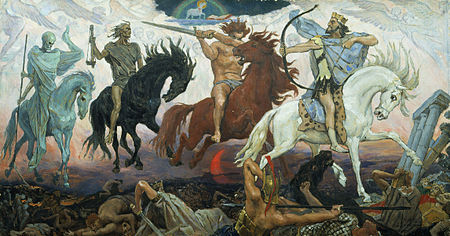
I hate to say it, but there will always be famine, and poverty, and war, and sickness. We can continue to drain our treasury for continued, sometimes appropriate efforts to stifle these Four Horsemen of the Apocalypse, but there must be some awareness of other priorities. Science, in the long run may have a significant influence on mitigating these "horsemen" if we continue down this road of discovery.
How many youngsters were inspired to enter engineering, or science because of the Shuttle programs, or photos from the Hubble Space Telescope? Where will all those inquiring minds end up? Will they be the people to discover new agricultural techniques to feed the starving, or irrigate the barren drought ridden lands of Africa, or maybe ever discover a cure for cancer? We must continue to develop programs in science and discovery that encourage those minds to devote their intellectual energies to our struggles with the questions and the problems of the human race. Telescopes and projects like the James Webb Space Telescope will open these doors to youngsters, and we must not close them now.
Mankind has many priorities, but I believe we must not sacrifice those priorities that keep our minds, and the dreams of our youngest citizens open to the unlimited possibilities of creative human energies. Space exploration is just one of those areas that accomplishes this goal. Literally, we must continue to "aim high."
http://online.wsj.com/article/SB10001424053111903999904576466411161774824.html?mod=WSJ_Opinion_LEADTop
are making a mistake if we don't continue to support the development of the James Webb Space Telescope.
I have been interested in astronomy since Halley's comet came here around 1986. I knew I wanted to see it--it only comes by once every 76 years, and there is something magical about that-- and it wasn't going to be "spectacular" so I had to learn something about astronomy to "find" it. So I started reading, and reading, and
Apparently, this telescope will open research into questions of the period of "first light": that time when first stars and galaxies firmed in our universe. It will give us the information necessary to pry into questions of the origins of black holes, dark matter, and the basic ideas of matter in our universe-- the fundamental questions we are here to probe.
I understand that we have many expenses now: Medicare, Social Security, defense, Medicaid, and numerous other Great Society programs that are draining our resources,
but mankind also has other priorities that seem, to me, to exist in a separate "universe" of priorities.
When I was in high school, Paul Levin's slogan as he ran for Student Council President (and he won) was "aim high." That was a good slogan then, and it fits this situation now. Mankind exists for some reason, and if anything matters, it is our continued journey into the question of WHY. Exploration of space is, I believe, one of our higher callings in this regard. It gives us as a people, a fundamental raison d'etre that makes perfect sense. When we abandon this quest, we denigrate ourselves as a people.
I hate to say it, but there will always be famine, and poverty, and war, and sickness. We can continue to drain our treasury for continued, sometimes appropriate efforts to stifle these Four Horsemen of the Apocalypse, but there must be some awareness of other priorities. Science, in the long run may have a significant influence on mitigating these "horsemen" if we continue down this road of discovery.
How many youngsters were inspired to enter engineering, or science because of the Shuttle programs, or photos from the Hubble Space Telescope? Where will all those inquiring minds end up? Will they be the people to discover new agricultural techniques to feed the starving, or irrigate the barren drought ridden lands of Africa, or maybe ever discover a cure for cancer? We must continue to develop programs in science and discovery that encourage those minds to devote their intellectual energies to our struggles with the questions and the problems of the human race. Telescopes and projects like the James Webb Space Telescope will open these doors to youngsters, and we must not close them now.
Mankind has many priorities, but I believe we must not sacrifice those priorities that keep our minds, and the dreams of our youngest citizens open to the unlimited possibilities of creative human energies. Space exploration is just one of those areas that accomplishes this goal. Literally, we must continue to "aim high."
Wednesday, July 6, 2011
The Declaration of Independence: a Document for the Future
Another Independence Day has now come and gone, and with it the usual fireworks, and parades, and occasional thoughts of what this day might mean to all of us. It means something about Freedom, and Liberty, and isn't there something in there about
Happiness? Well, that day is now over, so it's back to work, isn't it. But it's worth taking a few more minutes to consider two specific areas of the Declaration, because they set a social precedent that is worth reconsidering in a bit more detail.
The beginning of the second paragraph are words to treasure for all eternity. They set forth the basic concept of all human relationships, and relationships with governments for all people for all time. "We hold these truths to be self-evident, that all men are created equal, that they are endowed by their Creator with certain unalienable Rights, that among these are Life, Liberty, and the pursuit of Happiness."
Now we haven't been able to do this in this country, but we are trying. The "tricky" adjustment we made, in the beginning, to make blacks 3/5ths of a person, was just our human frailty again, trying to "get around" a difficult standard that we couldn't meet at that time. But we eventually did, didn't we, it only took us about two hundred years. But the point is, it is the words in our Declaration of Independence that lead us in this direction. What magnificence.
This statement includes the basic ideals that all nations must strive to emulate if their people are to have a share of human dignity. Not all countries, however, do this, and the recent encounter of the Somali pirates with the Russian commandos clearly illustrates this deficiency in Russian politics. http://www.youtube.com/watch?v=wT6WI4SBwx4
After the pirates captured a Russian ship, the Russian commandos boarded the ship, and took the pirates prisoner. As the above link to the film shows, the Somalis were placed in their boat, and sent off to die in a massive explosion presumably controlled by the Russian soldiers.
When I first heard about this incident, I thought " the Russians know how to handle these SOBs don't they," but on second thought I realized their behavior was based on an absence of other, more fundamental principles.
It costs money and time to handle captured pirates. Food, guards, courts,
transportation, all these things must be managed to bring these criminals to justice. The Declaration, instructs us that these people have "certain unalienable rights" so we do all these time consuming and expensive things because we believe that each individual has rights that are beyond our government's powers. It's our obligation. The Russians, on the other hand, do not have a "Declaration of Independence." Unfortunately, they have treated these criminals as objects, and not as people. I for one would rather live in our "Declaration society." I only realized this when I looked at this video (I suggest you do it), and thought about our Declaration of Independence.
One other point needs mentioning. Stalin tried to eliminate all religion from Russia under his rule. He did this because he wanted to create a society in which the government, in the eyes of the people, was supreme. In the United States, even though there are forces that are fighting against it, our founders believed in "in God we trust." Our government is not supreme--and that's evident as we watch the Congress try to handle our debt crisis.
One other area of our Declaration deserves mention as we pass through this July 4th, and that's the very end: "And for the support of this Declaration, with a firm reliance on the protection of divine Providence, we mutually pledge to each other our Lives, our Fortunes, and our sacred Honor."
I've been at a lot of meetings in my life: Board meetings, medical society meetings, and on, and on, and on. I have, many times, imagined that the Chairman of one of these would say, "I have motion on the floor that we pledge our Lives, our Fortunes, and our sacred Honor. Do I have a second?" At that moment I imagine that the hall would be as quite as a tomb.
So next July 4th, I suggest, you think about the depth of commitment of the Founders. It is hard to match today. The only group I know of that actually tries to do this is our military, and they should be venerated for this. Also, think about how difficult it has been for us to live up to the promise of "all men are created equal," but also think about how each of us benefits from this laudable standard. I wouldn't want it any other way, because that's our promise of Liberty.
The beginning of the second paragraph are words to treasure for all eternity. They set forth the basic concept of all human relationships, and relationships with governments for all people for all time. "We hold these truths to be self-evident, that all men are created equal, that they are endowed by their Creator with certain unalienable Rights, that among these are Life, Liberty, and the pursuit of Happiness."
Now we haven't been able to do this in this country, but we are trying. The "tricky" adjustment we made, in the beginning, to make blacks 3/5ths of a person, was just our human frailty again, trying to "get around" a difficult standard that we couldn't meet at that time. But we eventually did, didn't we, it only took us about two hundred years. But the point is, it is the words in our Declaration of Independence that lead us in this direction. What magnificence.
This statement includes the basic ideals that all nations must strive to emulate if their people are to have a share of human dignity. Not all countries, however, do this, and the recent encounter of the Somali pirates with the Russian commandos clearly illustrates this deficiency in Russian politics. http://www.youtube.com/watch?v=wT6WI4SBwx4
After the pirates captured a Russian ship, the Russian commandos boarded the ship, and took the pirates prisoner. As the above link to the film shows, the Somalis were placed in their boat, and sent off to die in a massive explosion presumably controlled by the Russian soldiers.
When I first heard about this incident, I thought " the Russians know how to handle these SOBs don't they," but on second thought I realized their behavior was based on an absence of other, more fundamental principles.
It costs money and time to handle captured pirates. Food, guards, courts,
transportation, all these things must be managed to bring these criminals to justice. The Declaration, instructs us that these people have "certain unalienable rights" so we do all these time consuming and expensive things because we believe that each individual has rights that are beyond our government's powers. It's our obligation. The Russians, on the other hand, do not have a "Declaration of Independence." Unfortunately, they have treated these criminals as objects, and not as people. I for one would rather live in our "Declaration society." I only realized this when I looked at this video (I suggest you do it), and thought about our Declaration of Independence.
One other point needs mentioning. Stalin tried to eliminate all religion from Russia under his rule. He did this because he wanted to create a society in which the government, in the eyes of the people, was supreme. In the United States, even though there are forces that are fighting against it, our founders believed in "in God we trust." Our government is not supreme--and that's evident as we watch the Congress try to handle our debt crisis.
One other area of our Declaration deserves mention as we pass through this July 4th, and that's the very end: "And for the support of this Declaration, with a firm reliance on the protection of divine Providence, we mutually pledge to each other our Lives, our Fortunes, and our sacred Honor."
I've been at a lot of meetings in my life: Board meetings, medical society meetings, and on, and on, and on. I have, many times, imagined that the Chairman of one of these would say, "I have motion on the floor that we pledge our Lives, our Fortunes, and our sacred Honor. Do I have a second?" At that moment I imagine that the hall would be as quite as a tomb.
So next July 4th, I suggest, you think about the depth of commitment of the Founders. It is hard to match today. The only group I know of that actually tries to do this is our military, and they should be venerated for this. Also, think about how difficult it has been for us to live up to the promise of "all men are created equal," but also think about how each of us benefits from this laudable standard. I wouldn't want it any other way, because that's our promise of Liberty.
Subscribe to:
Posts (Atom)