Saturday, October 30, 2010

Return to Gettysburg this Tuesday


Eleven score and seven years ago our fathers brought forth on this continent a new nation, conceived in Liberty and dedicated to the proposition that all men are created equal. In three days we will test that proposition again and determine whether a nation so conceived and so dedicated can long endure.

We have the chance again this Tuesday to vote and determine whether this nation is a nation of, by, and for the people, or a nation of, by, and for the government. This is an opportunity to demonstrate our strength as voters and re-establish our future direction as a nation. We have the opportunity to restate the proposition that the power comes from the people and not from the elite. Do we want the government to be in charge, or do we the people want that power.

If there is any single example that demonstrates our arrival at this critical point in our collective national history, it is the manner in which the "health care bill" was passed. "Let's pass it and then we will find out what is in it." Had they read it prior to passage? No!

We citizens have the opportunity Tuesday to demonstrate that this is a government of, by and for the people by voting out those who patronized us by their arrogance and actions these past two years. They work for us, and we must demonstrate this at the polls. If we don't we will be headed down the road to enslavement by our government.

Finally, this is a nation "under God." It is not a nation under government. I hope we are wise enough not to place our ultimate trust in the creations and laws of man which are always flawed, but in the ideals of a higher source. Even though some would like to remove it, "In God we trust" was chosen as our slogan for a reason. With this motto as our guide we "shall not perish from this earth."

Monday, August 9, 2010

New Era for Blog

Trip of a Lifetime

Anne and I are on our Real Vacation. We are going to China. We left yesterday, and flew to San Francisco for a two day lay over to adjust to the time change, and it's 12 hours difference in China.

The "adventure" involved a 3 hour delay because something was wrong with the plane. Really, I'd rather they get it right before we take off. But we arrived in SF about 11 o,clock our time-EST. Good night rest, and now out on the town. We will go into the city and see the "T bone" itself. Hope there aren't any earth quakes!

There will be a lot of moving around on this trip, so I hope I have time to keep you all up with our adventure. What a great feeling to leave the "shoulds and oughts" at home, and head into the world for observation, investigation, and learning.

I have wanted to go to China for a long time mainly because it is so different than my home town, Chicago. New culture, different ideas, great opportunity. I surmise that it will be similar to other travels I have had in that the people turn out to look different, wear different clothes, have different customs, but the same in their fundamental desires, needs, and aspirations.

More to follow, I hope.
JP

Sunday, January 31, 2010

Why Physicians are Depressed


I have wondered for quite a while now why "hope" has been taken away from the practice of medicine. I am getting older, and may retire in a year of two, but I see it in my younger colleagues. They look forward to working fewer hours, complaining about the ever increasing scrutiny of physicians, and the all too common government threats to reduce payments to physicians under Medicare. The milieu for practicing medicine is "not what it used to be."

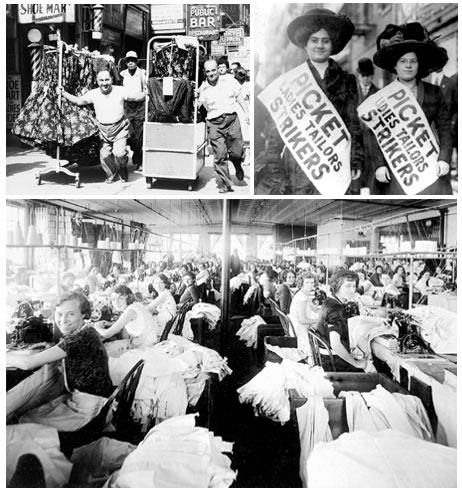
In reading a recent book, "Outliers:The Story of Success" by Malcolm Gladwell, I think I have found the answer. Mr. Gladwell tells the story of Mr. Borgenicht and his wife who started sewing aprons in their kitchen, and built a very successful business in the garment district of New York City. He describes in the following paragraph why Mr. Borgenicht was successful, and why he had "hope." Examining the field of medicine from the perspective that Mr. Gladwell examines the work of Mr. Borgenicht will help us expose the forces in medicine that taking hope out of our practices.

"When Borgenicht came home at night to his children, he may have been tired and poor and overwhelmed, but he was alive. He was his own boss. He was responsible for his own decisions and direction. His work was complex: it engaged his mind and imagination. And in his work, there was a relationship between effort and reward: the longer he and Regina (his wife) stayed up at night sewing aprons, the more money they made the next day on the streets... (my bold)Those three things-autonomy, complexity, and a connection between effort and reward-are, most people agree, the three qualities that work has to have if it is to be satisfying." Is practicing medicine satisfying these days? I would like to examine these three qualities in the practice of medicine: autonomy, complexity and connection between effort and reward.

How about autonomy. Physicians must pass Board Exams-I don't have a problem with that idea, but the exams are changing-every few years now, and they are now going to require continuous re-certification. I recently re-certified in cardio-thoracic surgery and the examination was effective, educational and enjoyable. I was treated like an adult, a professional. It was a take home exam which showed me a critique of the question after I tried to answer it the first time. After reviewing the critique (which contained the answer), I answered the question a second time. It was an educational process which I enjoyed even though I do not do most of the procedures I was queried about. Now, because of the increasing scrutiny of physicians, the exam will be a closed book exam that younger surgeons will have to travel to some hotel to take. Don't we have enough bureaucrats reviewing and checking on us at multiple levels? Ever hear of the "one hundred lives campaign?"

That's only one type of scrutiny. I haven't mentioned JACHO and its review on new doctors, and doctors private offices, and peer review, and CME requirements, and applications for privileges to hospitals, and even-if you can believe it- applying to be on an insurance company panel of "approved" doctors. If something bad happens in surgery, and it can happen, the review is never ending.

I once was placing a pacemaker in a very sick patient. She ended up doing alright, but during the case, she had a cardiac arrest. It was handled fine, and she survived without consequences. During her cardiac arrest,however, while I was resuscitating her, I actually thought, "I can't believe the bureaucracy I will have to go through if she dies!" What a confining and oppressive atmosphere in which to practice medicine. Autonomy is gone, and with it, any sense of professionalism that used to serve as the basis of a life of personal sacrifice for the patients. Are we going into medicine now as a "lifestyle" choice?

Mr. Gladwell's second requirement for hope in a vocation is complexity. I think all will agree that the physician's job is complex, but even the complexity is being threatened by intrusions of others into the daily work of the physician. Documentation has become so important in the field of medicine, that it is just about becoming medical care. At times, the patients seem to be getting in the way of this medical care, and if they would just go away, we could finish our documentation. Why so much documentation? It is done for legal and reimbursement reasons. It doesn't have anything to do with patient care.

In addition, we are told what to write. We can't say diabetes anymore, it has to be "type II diabetes," and anemia is now "blood loss anemia." Imagine controlling what a real professional must write, and how details must be written. Is that another limit on the ever disappearing reward of professional freedom?

Finally, their is a relationship "between effort and reward." There is none whatsoever. Third parties control this important aspect of any service relationship, and they have created systems that exist to decrease reimbursement to providers rather than fairly compensate the work of physicians. Most physicians don't know the details of the reimbursement, but they keep working harder, because they know that their income continues to drop while the bonuses of the third party administrators continues to increase.

I worry about medical care not so much because there are so many millions uninsured, and that most folks can't afford medical care, but I worry that the physicians and other "providers" are working in a field that does not satisfy Mr. Gladwell's requirements for a satisfying work environment. What does this portend for patients in the future? In a word, trouble. I think the relationship between the patient and the physician is dissolving. I think that in the future, there is a danger that when we are sick and vulnerable, and frightened, there will not be much of a connection with the person who is "in charge" of the decisions that will effect our life and limb. That does not bode well for our quest of "coverage for all."

James P. Weaver, M.D.,FACS

Saturday, January 30, 2010

The Physician's Vow of Poverty?

A recent editorial in the New England Journal of Medicine "Medicine's Ethical Responsibility for Health Care Reform" discusses Medicine's ethical obligations in the current battle for health care reform. Dr. Brody, the author, suggests that medical specialties come up with a top five diagnostic tests or treatments that are commonly ordered by members of a specialty that are expensive and show no meaningful benefit for the patient. I can't disagree with that idea for I have seen many tests-meaningful malpractice reform might change this- and procedures that don't seem to do much for the patient.

That is the essence of his paper, but he has slipped in a zinger at the beginning of his argument that deserves much further public debate.

He mentions the reform that health insurance companies and pharmaceutical companies have offered to hold down the cost of medical care, and then opines that physician support "has been made contingent on promises that physicians' income would not be negatively affected by reform."

He goes on to remind us that physicians have "sworn an oath to place the interests of the patient ahead of their own interests-including their financial interests." He also notes that none of the for profit health care industries that have promised cost savings have taken such an oath. Well, true enough, but medicine has not taken a vow of relative poverty either, and this deserves further discussion.

Physicians deserve to earn a good living just as the leaders of the pharmaceutical and insurance industries do. And no, they haven't taken such an oath. The millions they earn each year and the way their customers are manipulated and swindled is indisputable proof of that. Physicians earn more than most of us, so is it wrong for them to want to preserve their incomes?

In most clinical situations today, the financial relationship between the physician and patient is not material. Both parties have fallen into the paradigm that the third party controls this aspect of the relationship. Physicians have little leverage over reimbursement from third parties for the noteworthy work they do. Medicare typically pays about 30% of charges, and Medicaid pays worse. To make matters more inequitable, the "private insurers" tied their payments to Medicare over ten years ago in a exquisitely perceptive move to relentlessly lower their payments to physicians.

Over five years ago, the Annals of Thoracic Surgery published an article that dealt with the question of the "purchasing power of thoracic procedures." Their analysis by noted economists showed that the "purchasing power" from the income of thoracic procedures had decreased 50% over the preceding ten years. It has not gotten any better in the last five years, and it doesn't look like it will improve in the next five either.

Physicians are members of the "learned professions." We all know that the interests of the patients are primary, but physicians have financial obligations like everyone. I recently talked to a family doctor who owed over $200,000 in loans from her education. Don't physicians have families, and homes, and other expenses that we all have? Professional athletes commonly earn in the six figures, and many earn much more, and all they do is entertain us. How much is it worth to us to pay someone who will save our life?

I don't agree with Nancy Polosi about many things, but I do agree that the insurance companies (including Medicare) have strangled the economic rights of providers and patients while maintaining a comfortable margin of profit for themselves. This is why medicine must say that it wants to preserve its income when and if health care is reformed. Physicians believe that an inequitable portion of the proposed "cost saving measures" will come out of their pockets because they do not believe they have any significant leverage or clout in the negotiations. They have not had much influence in the past and the future doesn't seem any brighter.

On a one to one basis, I believe most physicians will treat their patients with understanding and respect when it comes to economic matters of reimbursement. Putting the third party in the middle of that relationship has damaged the basis of medicine's professionalism- our relationship with our patients. Preserving physician's income will help to reinforce the bond of service that physicians have promised by paying providers closer to what they are worth in the delicately intimate and consequential exchange the transpires in health care encounters.

James P. Weaver, M.D., FACS
Durham, N.C.

Sunday, August 16, 2009

Health Care Reform: Marred by Conflict

This is the third or fourth article I have written about health care reform. There are so many ramifications with this reform struggle, that it lends itself to in depth analysis from innumerable perspectives. I have concerns about being labeled a "spoiler" or a "right wing extremist" but I am neither of these. I am just fascinated with the implications of this battle that come from our American culture and government.

First of all, I believe we do need some health care reform. Obama has said things that are correct such as the costs are one of the factors that are ruining our economy. We need to control costs, but I'm not certain what he recommends will do it. There are two fundamental truths that must give all of us some fear about this debate.

The first is, that all governments,including ours, lie to their constituents. I know this is not what one wishes to say about one's government, but it is simply the truth. History proves it. Take the "withholding tax" on our wages. It was instituted during WWII because they needed the money for the war effort. It was going to stop after the War ended, but it wasn't. Another more applicable example would be the title of the first paragraph of the Medicare law which reads,"Prohibition Against Any Federal Interference." The federal government interferes everywhere with the practice of medicine even though it promised not to. That's just what governments do!

Now,I don't believe that the "good people" up there in Washington would purposefully lie, but once a law is created, events happen that force revisions that frequently make the original concept contain lies that may not have been originally intended. History works that way. The trick is to figure out what might happen, and how a law might change in the future, and do everything to protect all of us from these unintended consequences.

A second, more serious problem with our government's proposals is the understanding that the Congress has a integral conflict of interest with this type of legislation. Without beating around the bush, they have promised too much, and they cannot afford all of their promises: Social security, Medicare, Medicaid, government pensions to name a few. It turns out that the shorter our life spans, the less our government has to pay to meet these obligations. Dead people don't collect Social Security!

Here, our government is walking a thin line. Counseling the elderly about "end of life decisions" approaches this conflict a bit too openly, and explains why this provision was removed from the bill. Unfortunately, this conflict does not go away with that small change. How about cancer therapy, or dialysis, or coronary bypass for the elderly? Does that prolong life and increase its financial obligations to us citizens? Unfortunately, our government, and not our lawmakers, is constructed to benefit when laws are passed that encourage all of us to die early. It's best if our government avoids tampering with laws that directly influence our longevity. Controlling our access to medical care does just that.

Again, we do need health care reform, but ObamaCare it too controlling and raises more conflict than it solves. The hostile reaction of our citizens is directly related to the underlying conflicts just raised, and they will not go away. Tort reform, insurance regulation, and futile care legislation would be a good start to the type of reform we really need. Where is it?

James P. Weaver,M.D.,FACS

Tuesday, August 4, 2009

Why So Much Trouble with Health Care Reform?


The battle is getting brutally fierce now at the town meetings.
Congress folks are seeing the righteous anger of the people. Why, one might ask, is this happening? Don't we have a "broken health care system" and doesn't everyone want health care reform NOW!? Why are people acting so vociferously against this proposed legislation?

I believe that health care reform threatens the indispensable fundamental principles that have formed the foundation of the social structure of the United States: individualism, freedom, and most of all our basic distrust of government. In addition, there is charity. Americans are generous and they resent government stealing from one group of citizens to give to another group, especially when government acts like it deserves all the credit. All of the money that our government possesses has been taken(by force) from us citizens. I think most of us are tirelessly laboring daily to possess a little property, and watching our government throw it around ad lib (without reading the bills) is infuriating to us all.

Individualism runs through America's collective soul. Individualism also represents a quality of what is means to be an American. We are supposed to be FREE. Free to do what we wish, make decisions on your own, and free to face the consequences. Our freedoms define America, and give it the social energy for economic expansion and individual opportunity for success.

The problem with health care reform (and with the dreaded "public option" in particular) is that it threatens everything that represents FREEDOM. Will the government control what kind of medical care we can have? Will it control medical decisions so that we can't trust our doctors? Will it attempt to hasten our demise to lessen the entitlement debt it owes us- and that we were forced to pay for- as we get old? Doesn't our government have a fundamental conflict of interest in this debate anyway? After all, government is looking for ways to control costs, and our death would save the government money? These are genuinely frightening ideas because if they come to pass, and we can imagine they might, our freedoms will be taken away.

What it finally comes down to is our instinctive distrust of government. If this health care reform occurs, we are going to give our government a lot more control over our lives and our personal choices. As that woman in Philadelphia said the other day,"medicaid is broke, Medicare is going broke, Social Security is going broke, and the cash for clunkers program is failing. How can we give you (to Arlen Specter) control over another one-sixth of the economy? No way Senator, no way!"

I think we need to remember that the statue in the New York harbor is called "The Statue of Liberty." It is not the statue of safety through government handouts. The fundamental problem with this movement (appropriate term) is that it threatens the essence of what America is supposed to mean as a country of personal freedom. Somewhere in this demagogic attack on the previous promise of our God given freedoms is the source of the unrest with this Democratic health care push. Yes, we do need change in health care, but not because we have the worst system in the world, but because it needs some changes. What we do not want is the undoing of the essence of our social structure by allowing our government to make all of these personal decisions for us. We can't trust them now, can we?

What we need is tort reform first, but politics is preventing that, and that "prevention" adds to the distrust of this whole movement. Next, we need controls on the insurance companies to make the vast majority of the health care dollars flow into the "care" system, and not into the pockets of the insurance bureaucrats. Finally we need a futile care law that basically says that when three doctors determine that a situation is "futile" that the family has one week to understand or the care is withdrawn in spite of objections. At that point only comfort measures are given.

Oh, there are other things we could do like tamper with the "preexisting condition" problem, or waste and fraud in the system itself. Yes, we do need change but a government takeover is not the way to proceed. I do not believe that, justifiably, there is enough trust in our government to allow sort of change that the liberals are proposing. It threatens too many of our guaranteed freedoms. Remember, life, liberty and the pursuit of happiness?

James P. Weaver, M.D.,FACS

Sunday, August 2, 2009

Open letter to the American College of Surgeons

I have been a member of The American College of Surgeons since the mid 1970s, and have watched many decisions by this body that have lessened the professional standing of surgeons in our nation (American College of Surgeons, Where are you?,Mychasecuts,March 2009), but the current health care debate has revealed, unfortunately, another mistake in leadership of our organization that will have far reaching consequences for our collective futures as surgeons.

The College has recently acknowledged that they are supporting this "reform" because they need to have a "seat at the table." Apparently the College is afraid that if it is not "at the table" Congress will not hear its opinions on issues it believes are vitally important. It seems that the College does not understand or value history. First of all, what makes us believe that we can trust the Congress? History proves otherwise. The first paragraph of the Medicare law has a title: "Prohibition Against Any Federal Interference." Does anyone believe that the Federal Government has not interfered with the practice of medicine? Of course they have, and they intend, or rather they MUST continue to do so for Congress has no choice.

In order to stay in office, Congress makes rash promises to voters. This forces them to tell half-truths, and twist ideas while they promise these "gifts." There is no way they can afford these "gifts" as their promises, especially on health care, are economically unsustainable. They promise, however, because they wish to stay in power. In a sense, they are "forced" to lie! I cannot understand why the College fails to see this fundamental truth.

It is clear that our government is tampering with the lives and sweat, in essence the freedoms, of highly trained surgeons, and not considering the details of the "surgical lifestyle," market forces, work environment and need for a surgeon's hope for the future. Surgeons are small minority in this BIG problem of medical care delivery, and the Congress is certainly going to roll over our rights. They will do it slowly, but THEY ARE GOING TO DO IT! After all, is the ruthless intimidation that has been used to "force" us to come to their table the work of a group that will listen to our position?

The College should have refused to sit at a table with this bunch of bureaucrats that, history has shown, are going to smile, and wish us well, and then do exactly what they want to. They have flagrantly violated the promise of "prohibition against any Federal interference."

Does the American College of Surgeons really want to be part of this fiasco? The American people are not and have not been told the truth. Once this plan is in, and time exposes the certain draconian consequences, we will fare better if we are not a part the original planning. Won't we be blamed also if we are "at the table?"

The College surely knows that there are only two ways to control the distribution of any resource: price or availability. In countries where price is excluded by politics, and there is a nationalized system, availability is the means of control of expenditures. That explains why it takes three months to have a MRI in Canada. Do we want the same? It would be appreciated if our representatives would at least admit publicly that we will have to have many objectionable ways to control costs in their incipient system.

Finally, I cannot understand how the College is so far distant from my personal understanding of this movement (appropriate term). I have been a practicing surgeon for almost 40 years now, and have an excellent feel for the essence of medical practice. Where does the leadership get their understanding of the desires of the members? A survey would be helpful. Do they believe that they know so much more than the membership that they can diverge completely from the desires and understandings of the group?

Surgeons, in the past, have been trained to persevere and approach obstacles with quiet courage and unshakable fortitude. Where is this attitude in our current leadership? Have they stood before the Congress and told the TRUTH? I do not believe so. Is the palace of government so intimidating that we cannot articulate the necessity of our personal God given rights to this bunch of charlatans? If the College cannot do it, who then, will? How many of our personal rights are we going to sacrifice by slobbering up to the government trough of handouts? This will inevitably affect our behavior with our patients and with that our professionalism. May God help us all.

James P. Weaver, M.D.,FACS