A recent conference in the Congress deals with the "threat" of Hospice becoming the rationer for the elderly. Listen to this Professor give his opinion about this issue. There are few ways out of this money crunch. Saving dollars from medical care means cutting somewhere, and the elderly are a good target! See this video:
See :"The Hospice Threat", this blog, January 19, 2009.
Wednesday, May 13, 2009


Saturday, April 11, 2009
Motorcycling and Surgery

I'm afraid to write this because it might cut into my credibility, but the internet is a "safe" place to write, so here goes.
I am a surgeon, and I also ride a motorcycle. I have ridden off and on for forty years! I rode for a while while I lived in Cleveland, Ohio, but it was too cold, and the children were too young, and it wasn't very safe in a big city. So I sold the bike (a 1969 Triumph tiger) and quit for about 20 years.
In my early 40's I picked up the bug again, and bought a Yahama Virago, and living in North Carolina then, I decided to ride the length of the Blue Ridge Parkway. If you have never ridden on this road it is a must. Probably one of the most beautiful roads in the United States.
Well, I practiced, took the Motorcycle Safety Foundation course on safety, and took a 10 day vacation and took the trip. It was beautiful. I stayed with friends along the way, and had a ball. I had intended to sell the bike after the trip, but I didn't and that was over 20 years ago. Since then, I have been up to Ohio to the Vintage Motorcycle Days meeting, ridden across the USA twice, and traveled up the northeast part of the country besides taken numerous smaller trips of a few days in the surrounding vicinity. Finally, I took a once in a lifetime 10 day trip over to Europe and traveled through the alps. It just never left my blood, and I still yearn for more travels.

But why do I do this, and for that matter, what can it possibly have to do with surgery? More that most of you folks that do not ride a motorcycle can imagine.
To get right to the point, motorcycling is like surgery because you have to know what you are doing or you get your butt in a jam. You have to know the rules, be careful, and watch our for unexpected circumstances. The major difference is that when you ride a motorcycle, you get a full sense of freedom and a deep appreciation of the nature of your surroundings.
It hurts me to go to a state (like Arizona) where there are no helmet laws, and see riders biking without a helmet. That makes me immediately think they do not understand the depth of the risk. They are being foolish as far as I can see. When I see someone drinking alcohol, and biking, I get the same feeling. I guess that's why they are not surgeons. There are more effective ways to demonstrate the idea of individual freedom. Our heads are fragile at 25mph, and it's just not worth it.
Because I do what I do, I feel at home on a bike. The best part is that even though I am in familiar surroundings, I can get the additional benefit of the feeling of freedom. I don't get that in the operating room.
So when you ride, I would advise you to ride safe. Wear good clothing, helmets, and shoes, and enjoy the experience. I have enjoyed it for years, and hopefully can continue to enjoy it for many more.
James P. Weaver, M.D., FACS
Thursday, April 9, 2009
Safety and Liberty, always competing

Safety and Liberty, two ideals which are constantly competing for primacy in our tempestuous lives. Most of us do not even see this battle, but it is going on in many venues. We just have to look for it.
I became aware of this struggle, and ordered my priorities in the battle over motorcycle helmet laws. I wanted more liberty, because I believe liberty strengthens us to face life as confident people. Liberty gives us the essence of our yearning to be a whole person. To have liberty, to be free, is an instinct infused into our souls at creation. We continue to search for it.
With the motorcycle helmet laws, the "safety people" want everyone to wear a helmet at all times- it's safer. The "liberty people" want to have the freedom to choose. Yes, they are safer, and I always wear one when I ride, but safety is not the only, or for that matter, the most important issue to consider.
The safety people want to preserve life-their priority- by being safe. Understood. But in the choice between life and liberty, which is the most important? My assessment is liberty! It is certain that many of us have sacrificed life to preserve liberty. Isn't that why many of us have died in war? In a multitude of circumstances, liberty easily trumps safety.
I can think of many examples where this battle rages on lesser levels: bicycle laws about helmets, seat belts in cars, walking up a hill with your 8 year old child, playing high school sports, and almost anything where their is a danger to life or limb. I believe that a child raised without liberty and all safety will lack essential attributes to succeed in the world: self confidence, ambition, and creativity to name a few. But again, from my perspective, liberty is most important.
The latest area in medical care which illustrates this conflict is the area of "patient safety." I don't have anything against patient safety, but it can go too far. Currently, it has become such a craze, that it is threatening to remove any semblance of professional liberty from the practice of medicine. Not only do we surgeons talk to the patients about their surgery, and have them sign a "request" for surgery, but we have to mark the site of the surgery before the patient enters the operating room, and then do a "time out" and repeat it all over again. The latest potential addition to this liturgy is a World Health Organization check list that the followers of this movement are potentially going to lay on us!
In surgery, this control came about because of "wrong patient or wrong site surgery." But how many of these occur (the numerator) and how many surgeries are there anyway (the denominator)? Isn't there a little bit of throwing out the baby with the bath water here?
I do not think we have carefully thought this through. "Safety uber allis," and to hell with liberty. There is no understanding or concern of the culture that this oppressive system is creating.
Do the safety people believe that physicians cannot create a safe environment or that they do not think patient safety is laudable? We have been thinking about it since the Oath was first spoken.
Physicians, especially surgeons, are a motivated group. We have succeeded in elementary school, high school, college, and have gone through rigorous training to reach a high level of societal responsibility. This is the essence of the "professional liberty" that society previously granted for completing this training. For me, and many others, this quest for liberty, is one of the motivations that propelled us along this arduous road. Is it wise to take this liberty away?
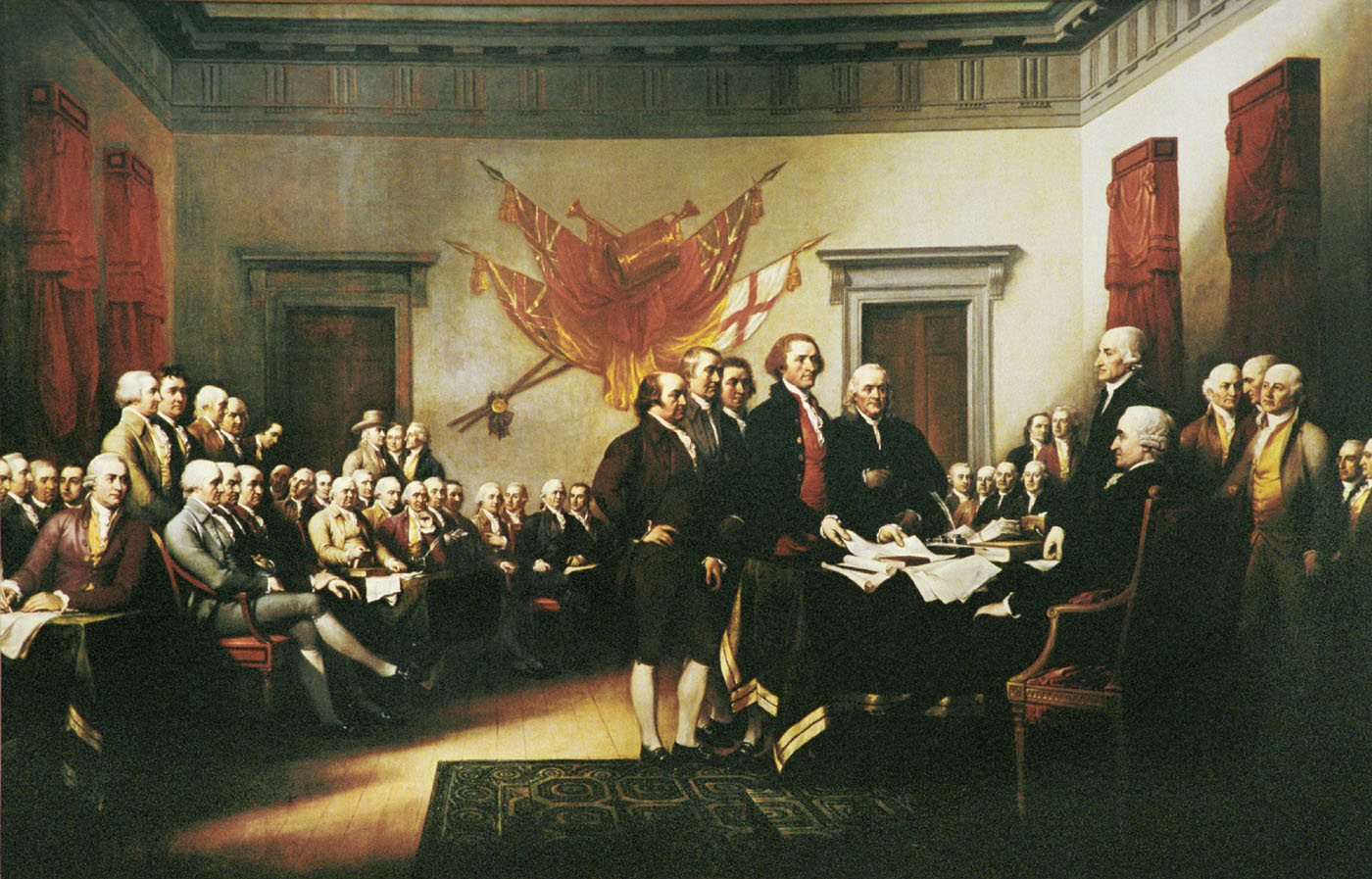
"We hold these truths to be self evident, that all men are created equal, that they are endowed by their Creator with certain unalienable Rights, that among these are Life, LIBERTY, and the pursuit of Happiness." These words were written by wise men. They were chosen because they understood the importance of liberty as essential to a full life. They didn't say "life, safety, and the pursuit of happiness." Many of them died in defense of their philosophy.
Patient safety must develop limits to its protocols. The continued erosion of professional liberty will not promote the excellence in medical care that we all strive for. Further equitable cooperation between practicing physicians and regulators must occur to preserve professional liberty and produce the optimal outcome for patient care that we all covet.
James P. Weaver, M.D.,FACS
Thursday, March 26, 2009
Salary for Service: the Future Physician Payment Method

With all the talk of health care reform, I have been thinking about how physicians of the future are going to be paid. Obama says that we are going to control costs, and make the system more efficient. (Haven't we always been doing this?) The question I have is what will happen to the providers of care under this revolution. Anyone who reads the criticisms of the current system will see a peppering of the phrase "fee for service" with a quick mention of its detrimental influence on health care costs. "Fee for service encourages physicians to do more things to keep their incomes up."Anyone with common sense can see that this argument is irrefutable. It's just human nature. If you need to make a living, and who doesn't, the temptation will be there to do more things that will generate more income.
The classic argument against this proposal is that physicians are "professionals" and they have the good of the patient as their first duty. This argument doesn't hold a drop of water today. Look at the money making specialty hospitals, look at advertising, look at work schedules of many physicians, look at the way private physicians have turned away from the hospital care of their sick patients and placed them in the hands of the hospitalists. It doesn't take long to see that the standard of caring for OUR patient has fallen short of the ideal of self effacement for the good of the patient. Today, there is a looming question out there about the very existence of "professionalism" in the ranks of medicine.
Controlling costs, that's the most important aim of this health care revolution, and there is one major change that will accomplish this goal: Place all physicians on salary. A salary, no way! It's clear that this is going to happen. Examining the implications will make it clear.
First, this will eliminate the constant drive to do MORE to increase income. It will stop this incentive. Is it desirable for health care reform to "control costs?" You betcha!
Second, it will decrease the number of borderline cases that are done to increase income which drives up the cost of medical care for the nation. It will, to look at it another way, begin a system of surreptitious rationing. Does anyone believe that a sixty hour per week(future work rules) surgeon, on salary, will want to "invest" days and possibly weeks in a elderly patient with numerous co-morbidities and an "ify" prognosis? If I know human nature, it's just not going to happen. The argument to the patient will be," you're just too sick to have this operation." This type of interaction will ration care without anyone knowing.
All of these results are coveted by the health care reformers: less incentive to "produce," and less serious illnesses to pay for. Imagine the cost savings.
Many physicians are on salary already, and they will fall in line easily. It's the private doctors that will cause problems with implementation of this system. No doubt it will be a gradual movement of getting them into a corner and giving them no options when the "answer" of salary will become "apparent." Will it be eliminating the threat of malpractice litigation that will tip the balance? I can't be certain, but it will happen. It's too obvious.
In some ways, it will not be all that bad. Physicians can them relax, move into a different "life style" (a common phrase among younger physicians), and enjoy activities besides medicine. My guess is that the only problem these doctors will face is when they become the patient. By then, it will be too late.
James P. Weaver, M.D.,FACS
Sunday, March 15, 2009
American College of Surgeons, Where Are You?

I have been a member of the American College of Surgeons for 30+ years, and I am still disappointed in its ability to defend the profession. Surgeons have lost any control of their work environment, and with that any true sense of a functioning professional. Where is the ACS on this issue?
In a previous article on this blog-A Problem with Patient Safety, Feb. 28, 2009- I explained how "patient safety" has taken a chunk out of professional freedom but that is not the only opportunity that has been squandered by the ACS (American College of Surgeons). In terms of "patient safety" I do not expect to hear a peep out of the ACS over the fact that I have discussed the absence of limits to the regulations over patient safety. In 2004, there were about 70 reports of "wrong site surgery" by the Joint Commission. My guess is that they included even wrong site anaesthetic blocks that were discovered and corrected prior to the surgery. They probably included "near misses." But the critical question is how many surgeries were done in the United States in 2004, and how far are we to go with the regulation of surgeons because of these few mistakes. My guess is that there is a baseline number of "wrong site surgeries" that will be done each year no matter how much control these many organizations impose. I do not condone mistakes, but I don't agree with regulations that are securing jobs for the regulators either. Where is the ACS on this issue?

Another area that illustrates the lack of attention to our professional freedom, is the ACS continued endorsement of regulations that disparage the profession. What does "pay for profession" mean anyway? I thought we were a profession, and that means that we do the best we can ALWAYS! Are they going to pay us more of we preform well? Does that mean that we don't do things well some of the time and we won't be paid as much for those procedures? The ACS should not agree to "pay for performance." Agreeing to this concept is disparaging to the principles of professionalism which the ACS is supposed to represent and protect. Where is the ACS?
Another example of "lack of fortitude" are the recent "should never happen" Medicare rules. Medicare is only looking for reasons not to pay for the work of physicians. Now, I can understand they will not pay for an instrument left in the patient, that makes sense. But what about mediastinal infection after heart surgery? This is clearly an attempt to enter a new area of "denial of payment." Where is the ACS?
I have been involved in hundreds of operations, and infections just happen. The rules are strict, and carefully applied, and IN SPITE of all the precautions, infections occur. It's clear that Medicare has added this exclusion to test our response. The ACS response should have been the same as mine: "Infections can occur in spite of rigorous precautions, and it is unacceptable to include mediastinal infection after heart surgery in this scheme." The ACS should mention the fact that Medicare attempts to withhold payment mainly because of their own budgetary constraints, but history predicts it will not be part of the discussion because the ACS will not bring it up. Where is the ACS?
I could add more, but finally, the Medicare reimbursement system. The ACS should go to Washington and tell them that there is no integrity in this system. The resource based relative value scale does not contain any mention of "value" to the patient. It's value that people pay for when they purchase any product. The RBRVS is a blatant lie, used to control the costs of the promises that the government cannot afford. The ACS should let Washington know that physicians have no trust in the determination of the "value" of their services because the government has a conflict of interest in determining this "value." Currently it has enslaved physicians, and is ruining the profession. It does not look good for the future of patient care under Medicare. Where is the ACS?
Another area that has had "no comment" from the ACS has been re-certification. Physicians are re-certified at all levels these days. The hospitals, the insurance companies, our societies, the state boards, the specialty boards all have a part in re-certification. Isn't that enough? Has the ACS stood up for surgeons, and stated that we have so many organizations and review groups watching us that re-certification is not necessary anymore. Where is the ACS?
American College of Surgeons, please reevaluate, and begin to take an active role in defending our profession.
James P. Weaver, M.D., FACS
Sunday, March 8, 2009
A note on Obama's Health Care Summit

Interesting blog from the Cato institute clarifies the make-up of the recent Health Care Summit. According to this blog, there were only those who advocate socialized medicine. Doesn't look good for patients or doctors.
It is good to keep in mind that when the President of Russia, Boris Yeltsin, needed a coronary bypass, the Russian government had to fly a team of surgeons from the United States to get the surgery done. Governments always have expenses that are more important than health care: tanks, guns, bombs, roads, bridges, and more infrastructure. After all, those who are sick are a tiny minority, and most of us believe we will never get sick. If the President of Russia couldn't get a coronary bypass under his own socialized health care system, what will happen to the average person in ours? It's a good question to ask.
I worry about many things in the future of medical care. How will they control costs? What rights will the patients have? What rights will the doctors have? How will talented individuals behave in a system that will surely control their every behavior? I do not believe the "talent" will go into medicine once it's clear that it is government run system. What will happen to research? What will happen to the pharmaceutical industry with the demand for less expensive medicines?
Socialists do not believe in the need for PROFIT in industry. They simply control it. Medical care is a special field. We need talented people to go into it. We need materials to work with, and we need many levels of research to develop the gadgets, and the drugs to help people. Once the power of government begins to take over this system, the creativity will cease. Profit feeds creativity, and government control will squash profit.
I always worry that if I get too far ahead of the crowd in my vision, that everyone will not be able to follow my logic. With this one, it is closer than you think. I don't think I am too far ahead of the thinkers. Government means FORCE, and I am afraid we are about to feel it.
James P. Weaver,M.D., FACS
Sunday, March 1, 2009
The Meaning of DNR

I had a provocative conversation last week with a Hospitalist. We talked about the meaning of DNR. I had always thought it meant if the patient stops breathing or goes into cardiac arrest, that one would not try to "bring her back" by external chest massage, electro shock, and iv drugs. The person I was talking with had a different interpretation of this term and stated that, "it means no heroic measures." I have thought about this for quite some time now, and it is a bit disconcerting.
What does "no heroic measures" mean anyway? Who determines what will be "heroic?" Heroic to one might be "necessary" to another. This is of concern, because the person who said this is a recently trained physician, a younger doctor. Is this what they are trained to think these days? I would like to examine this concept more closely.
In a recent post of mine on this blog-The Hospice Threat, January 19, 2009- I discussed my concern with the increasing population of elderly, decreasing dollars for health care, and overworked physicians, that the drive to treat the elderly will diminish. "That old guy has a pretty bad sprained ankle. Maybe we should just let him go,"is a phrase I have used to illustrate this probable future shift in physician behavior.
It seems to me that "no heroic measures" potentially is a much broader interpretation of the DNR concept. Is it heroic to treat a urinary tract infection in a 85 year old patient who has had a previous stroke and is hemiparetic? And how about using antibiotics to treat pneumonia in a renal failure patient with a previous amputation, cardiac disease, and a previous stroke, is that heroic? The problem with "no heroic measures" is that it is vague enough that it opens the door to RATIONING. This rationing, unfortunately, will be used in a "final" sense.
We don't like to say the "R"word, but it isgoing to happen; the question is how? Will certain services be denied? Will certain services be prohibited? My guess is that certain things will not be paid for, and others will not be available. The critical issue is that the behavior of physicians should not be influenced by societal pressures. I'm afraid that, in the future, the societal influences on physicians behavior will be covert and subtle. Physicians will just not do what they did twenty years ago to save an elderly patient.
I see this different understanding of DNR as another wedge into the physician-patient relationship, with the potential to weaken the physician's classical obligation for the care of the patient. This is yet another example of forces diminishing our Professionalism. With the financial pressures on medical care, this is just another brick in the foundation of rationing.

James P. Weaver, M.D.,FACS
Subscribe to:
Posts (Atom)