Sunday, March 15, 2009

American College of Surgeons, Where Are You?


I have been a member of the American College of Surgeons for 30+ years, and I am still disappointed in its ability to defend the profession. Surgeons have lost any control of their work environment, and with that any true sense of a functioning professional. Where is the ACS on this issue?

In a previous article on this blog-A Problem with Patient Safety, Feb. 28, 2009- I explained how "patient safety" has taken a chunk out of professional freedom but that is not the only opportunity that has been squandered by the ACS (American College of Surgeons). In terms of "patient safety" I do not expect to hear a peep out of the ACS over the fact that I have discussed the absence of limits to the regulations over patient safety. In 2004, there were about 70 reports of "wrong site surgery" by the Joint Commission. My guess is that they included even wrong site anaesthetic blocks that were discovered and corrected prior to the surgery. They probably included "near misses." But the critical question is how many surgeries were done in the United States in 2004, and how far are we to go with the regulation of surgeons because of these few mistakes. My guess is that there is a baseline number of "wrong site surgeries" that will be done each year no matter how much control these many organizations impose. I do not condone mistakes, but I don't agree with regulations that are securing jobs for the regulators either. Where is the ACS on this issue?

Another area that illustrates the lack of attention to our professional freedom, is the ACS continued endorsement of regulations that disparage the profession. What does "pay for profession" mean anyway? I thought we were a profession, and that means that we do the best we can ALWAYS! Are they going to pay us more of we preform well? Does that mean that we don't do things well some of the time and we won't be paid as much for those procedures? The ACS should not agree to "pay for performance." Agreeing to this concept is disparaging to the principles of professionalism which the ACS is supposed to represent and protect. Where is the ACS?

Another example of "lack of fortitude" are the recent "should never happen" Medicare rules. Medicare is only looking for reasons not to pay for the work of physicians. Now, I can understand they will not pay for an instrument left in the patient, that makes sense. But what about mediastinal infection after heart surgery? This is clearly an attempt to enter a new area of "denial of payment." Where is the ACS?

I have been involved in hundreds of operations, and infections just happen. The rules are strict, and carefully applied, and IN SPITE of all the precautions, infections occur. It's clear that Medicare has added this exclusion to test our response. The ACS response should have been the same as mine: "Infections can occur in spite of rigorous precautions, and it is unacceptable to include mediastinal infection after heart surgery in this scheme." The ACS should mention the fact that Medicare attempts to withhold payment mainly because of their own budgetary constraints, but history predicts it will not be part of the discussion because the ACS will not bring it up. Where is the ACS?

I could add more, but finally, the Medicare reimbursement system. The ACS should go to Washington and tell them that there is no integrity in this system. The resource based relative value scale does not contain any mention of "value" to the patient. It's value that people pay for when they purchase any product. The RBRVS is a blatant lie, used to control the costs of the promises that the government cannot afford. The ACS should let Washington know that physicians have no trust in the determination of the "value" of their services because the government has a conflict of interest in determining this "value." Currently it has enslaved physicians, and is ruining the profession. It does not look good for the future of patient care under Medicare. Where is the ACS?

Another area that has had "no comment" from the ACS has been re-certification. Physicians are re-certified at all levels these days. The hospitals, the insurance companies, our societies, the state boards, the specialty boards all have a part in re-certification. Isn't that enough? Has the ACS stood up for surgeons, and stated that we have so many organizations and review groups watching us that re-certification is not necessary anymore. Where is the ACS?

American College of Surgeons, please reevaluate, and begin to take an active role in defending our profession.

James P. Weaver, M.D., FACS

Sunday, March 8, 2009

A note on Obama's Health Care Summit


Interesting blog from the Cato institute clarifies the make-up of the recent Health Care Summit. According to this blog, there were only those who advocate socialized medicine. Doesn't look good for patients or doctors.

It is good to keep in mind that when the President of Russia, Boris Yeltsin, needed a coronary bypass, the Russian government had to fly a team of surgeons from the United States to get the surgery done. Governments always have expenses that are more important than health care: tanks, guns, bombs, roads, bridges, and more infrastructure. After all, those who are sick are a tiny minority, and most of us believe we will never get sick. If the President of Russia couldn't get a coronary bypass under his own socialized health care system, what will happen to the average person in ours? It's a good question to ask.

I worry about many things in the future of medical care. How will they control costs? What rights will the patients have? What rights will the doctors have? How will talented individuals behave in a system that will surely control their every behavior? I do not believe the "talent" will go into medicine once it's clear that it is government run system. What will happen to research? What will happen to the pharmaceutical industry with the demand for less expensive medicines?

Socialists do not believe in the need for PROFIT in industry. They simply control it. Medical care is a special field. We need talented people to go into it. We need materials to work with, and we need many levels of research to develop the gadgets, and the drugs to help people. Once the power of government begins to take over this system, the creativity will cease. Profit feeds creativity, and government control will squash profit.

I always worry that if I get too far ahead of the crowd in my vision, that everyone will not be able to follow my logic. With this one, it is closer than you think. I don't think I am too far ahead of the thinkers. Government means FORCE, and I am afraid we are about to feel it.

James P. Weaver,M.D., FACS

Sunday, March 1, 2009

The Meaning of DNR


I had a provocative conversation last week with a Hospitalist. We talked about the meaning of DNR. I had always thought it meant if the patient stops breathing or goes into cardiac arrest, that one would not try to "bring her back" by external chest massage, electro shock, and iv drugs. The person I was talking with had a different interpretation of this term and stated that, "it means no heroic measures." I have thought about this for quite some time now, and it is a bit disconcerting.


What does "no heroic measures" mean anyway? Who determines what will be "heroic?" Heroic to one might be "necessary" to another. This is of concern, because the person who said this is a recently trained physician, a younger doctor. Is this what they are trained to think these days? I would like to examine this concept more closely.

In a recent post of mine on this blog-The Hospice Threat, January 19, 2009- I discussed my concern with the increasing population of elderly, decreasing dollars for health care, and overworked physicians, that the drive to treat the elderly will diminish. "That old guy has a pretty bad sprained ankle. Maybe we should just let him go,"is a phrase I have used to illustrate this probable future shift in physician behavior.

It seems to me that "no heroic measures" potentially is a much broader interpretation of the DNR concept. Is it heroic to treat a urinary tract infection in a 85 year old patient who has had a previous stroke and is hemiparetic? And how about using antibiotics to treat pneumonia in a renal failure patient with a previous amputation, cardiac disease, and a previous stroke, is that heroic? The problem with "no heroic measures" is that it is vague enough that it opens the door to RATIONING. This rationing, unfortunately, will be used in a "final" sense.

We don't like to say the "R"word, but it isgoing to happen; the question is how? Will certain services be denied? Will certain services be prohibited? My guess is that certain things will not be paid for, and others will not be available. The critical issue is that the behavior of physicians should not be influenced by societal pressures. I'm afraid that, in the future, the societal influences on physicians behavior will be covert and subtle. Physicians will just not do what they did twenty years ago to save an elderly patient.

I see this different understanding of DNR as another wedge into the physician-patient relationship, with the potential to weaken the physician's classical obligation for the care of the patient. This is yet another example of forces diminishing our Professionalism. With the financial pressures on medical care, this is just another brick in the foundation of rationing.


James P. Weaver, M.D.,FACS

Saturday, February 28, 2009

A Problem with Patient Safety?

Don't think I'm about to write that patient safety is the best thing that ever happened to medical care. I'm not. I think it might be useful sometimes, and is occasionally a reasonable addition to procedures in medicine, but the problem with "patient safety" is that there are NO LIMITS to its implementation.

All this patient safety began around the time of the publication of the book, To Err is Human. It was published by the Institute of Medicine in 1999. There had been rumblings about safety before that, but that book began the major onslaught of regulations. JACHO, CMS, state agencies, leap frog, medical board organizations, insurance companies and others, too many to count,began to apply their own regulations to support the growing idea that the doctors were dangerous and needed to be controlled! After all, doctors kill over 100,000 patients/yr. with mistakes.

First of all, I'm not certain that figure is accurate. I have been in medicine for over 30 years, and I can barely remember deaths caused by errors. Is giving the "wrong" antibiotic prior to culture results a mistake; is an incisional hernia a mistake; is an infection after surgery a mistake (even in a malnourished patient); is a heart attack after a below knee amputation a mistake? These numbers added up, and fed the final conclusion of 100,000. These numbers are based on research done in the 1980s to discover why there were so many malpractice suits, and I have questions about these statistics. It sounded good, and this conclusion opened the door to control and regulation of doctors with no limits. After all, who can speak up against "patient safety?" Not me!
But there is problem with this crusade. "Outsiders" have been given authority to manipulate and control all aspects of physician behavior to the extent that any semblance of professionalism is being decimated. Professionalism includes the concept of PROFESSIONAL FREEDOM, and this has disappeared in medical practice. CMS demands some of these rules because of payment constraints, but they all jumble together to control the day to day behavior of physicians. Do they really believe we are trying to make errors? It just happens decisions in medical care are difficult, and that's why we used to be paid well for our work.

The words we use in our "private patient charts," the details of behavior in the operating room, the "time out," the concept of patient consult versus evaluation, instrument and sponge counts on cases with incisions only 3 centimeters long; updating a physical exam prior to surgery, re-dating the operative request;signing verbal orders within 24hours, dictating operative notes within 24 hours, and not to mention the continued devaluation of our services through reimbursement reduction, are just a few examples of the ever increasing infringement on professional liberty that physicians are forced to endure. Are these checks useful? Maybe some of them, we don't truly know. One thing, however, is for sure: they are selecting a certain type of physician who will practice in the future in this oppressive environment. This "new" doctor will be the type who will not live a life for medicine or for the patients. Medicine will become a job, a supplement to a "lifestyle" which offers time off, reasonable payment, time for family, and time for other "more important" activities. As long as these doctors follow the RULES, and stay under the radar of the regulators, they can continue to work at their job. Fortunately, it was not a job in the past, it was a profession.

Surgeons are now required to do a "time out" prior to operation. I have never operated on the wrong patient or wrong side in 30 years. But we are now required to mark the site prior to surgery, have the request signed before surgery, and discuss the site of surgery before we do it. I am surprised that we are not required to turn around three times after the "time out" and do it again to make sure we have the right patient!

If the specialty organizations-American College of Surgeons, American College of Physicians, American College of Cardiology, etc.- do not begin to speak up against the continued oppression of physicians, and begin to demand some reasonable limits to these oppressive regulations, I fear the patients of the future will be treated by physicians who are not particularly concerned or motivated to get the best for each patient. These new physicians will be a "physician bureaucrat" who is enforcing the RULES of "the system." I do not believe this is a bargain society wants. There can be no profession without "professional liberty." Professional behavior and motivation depends upon it.

James P. Weaver, M.D.

Monday, February 23, 2009

The Smoker's Choice: addiction


Apparently, there was a recent settlement for 8 million dollars in another "smokers" case. "They made me do it!" The plaintiff was the wife of a smoker who died at age 55 after years of smoking- he was ADDICTED. He died in 1997, at the age of 55. How long does it take for someone to hear the message? Smoking causes disease and death.

I used to smoke myself, and I knew in 1970, that smoking was dangerous for my health. I used to joke that the cigarettes I smoked were keeping the cancer cells quiet, and if I stopped, they would wake up and kill me. The above case is just another nail in the coffin of accepting personal responsibility for our behavior.

As a thoracic and vascular surgeon, I have thirty years of experience watching my patients smoke and struggle to stop. I have heard all the excuses in the world, "I've smoked for 50 years" and, "I'm addicted" are the most common. It's the "I'm addicted" that deserves further comment.

I think the people who make the "products" to help smokers stop want them to believe they are ADDICTED. Believing you are addicted means that you cannot stop WITHOUT buying their product to stop. That is what they want smokers to believe because it means money for them, but what they do not want smokers to consider is that addiction comes in different flavors. Their are addictions to narcotics, or alcohol, and these are serious. If you stop these drugs suddenly, you can die. Seizures, vomiting, and diarrhea are the consequences. But smoking is a special type of addiction that I call a "situational addiction."


As a previous smoker, I know what a situational addiction is. It's one that comes on under certain situations: up in the morning, read the newspaper, a cup of coffee, and a cigarette; an important telephone conversation and a cigarette; after dinner, a cup of coffee and a cigarette. All of these situations NEED a cigarette. I used to get up in the middle of the night, think about a problem that was bothering me, and have a cigarette. When I finally quit, it was the SITUATIONS that I had to deal with to stay away from cigs.

The most common reason someone who has quit goes back, is that something happens that upsets them, and they say," I need a cigarette." This behavior is not a physical addition, as alcohol or narcotics are, this is a situational addiction. This type of addition cannot be handled with medicines or patches, or hypnosis, or needles. It can only be managed with reasoning and attitude, and understanding.

Simply being aware of this distinction can help the smoker understand and deal with the urge to smoke. Change in one's situation can help relieve the stress and the desire for another smoke.

When I quit, I was nervous for about three days. By then, all the nicotine (the "addictive" substance) is gone from the body. That's when an understanding of the situational part of the "addiction" becomes important. I actually wrote the Attorney General about this about one year ago; he never answered.

Success in quiting smoking is as dependent on being aware of the situational part of this process as it is using a patch or other devices to control the urge. I believe the reason so many of these devices fail is because of a misunderstanding of the causes of this addiction. Good luck.

James P. Weaver, M.D.,FACS

Sunday, February 15, 2009

Doctor Ads

Physicians have been advertising ever since 1975, when the successful suit by the FTC against the AMA (Goldfarb v. Virginia State Bar) forced the AMA to remove the prohibition against advertising form its Code of Ethics. Since that time, physicians have used this tool to promote their practices. Unfortunately, physician advertising has placed doctors in the same venue as merchants, and degraded their previous status as one of the "learned professions."


In an article by Tomycz (N.D.Tomybz, Journal of Medical Ethics 2006;32:26-28),he explains that the leaders of the FTC believed that Medicine was mercantile, and needed to be regulated as a business. They believed that regulation would decrease the ever rising tide of medical costs. Didn't work did it!

The original AMA prohibition began in the 1800's, and was generated by the large amount of advertising put out by a multitude of potent makers and charlatans. Not wanting to be identified with this behavior, which was frequently deceptive, this medical organization forbade advertising by its members.

Today, physician's ads are ubiquitous. They are not false, or misleading most of the time. It is not unusual to see one next to a furniture store ad, or a restaurant ad, which places the physician firmly in the arena of the merchant. I have even seen a license plate cover with the name of an orthopedic practice in my town. How about identifying with a car dealership?

The real problem with advertising is that it threatens to dissolve the distinction between what is supposed to be the Profession of medicine, and business. Medicine, in the classical sense, is supposed to be a profession that carries an obligation of self sacrifice and self effacement towards the ultimate good for the patient. This characteristic of the profession is what generates the essential element of TRUST between the patient and the physician.

A merchants might want you to trust them, but they are not going to have any self effacement or sacrifice in their part of the relationship. If physicians are to be regarded as a profession, all of these elements-self sacrifice, self effacement, and trust-must be part of their ethic. By advertising, physicians place themselves in the venue of the merchants, dissolving a significant distinction and jeopardizing a trusting relationship with their patients. Is my doctor in it for the money?

I am aware, that in the current financial environment, doctors believe they must advertise to stay competitive. But they must be aware of the element of "professional suicide" that accompanies the road of self promotion. Medicine should remain a profession that is not interested in selling you anything. Our best advertisement is our reputation and our service.

James P. Weaver, M.D., FACS

Friday, February 6, 2009

Medical Care Oppression

I know most people think physicians have a pleasant professional life, but that is not true. The current atmosphere in the medical world is not a happy world. Most physicians do not advise there children to go into medical fields, and that is a tragedy. A practicing physician, around 40 years of age, should believe that practicing medicine is the best thing to do, and that nothing else would be better.

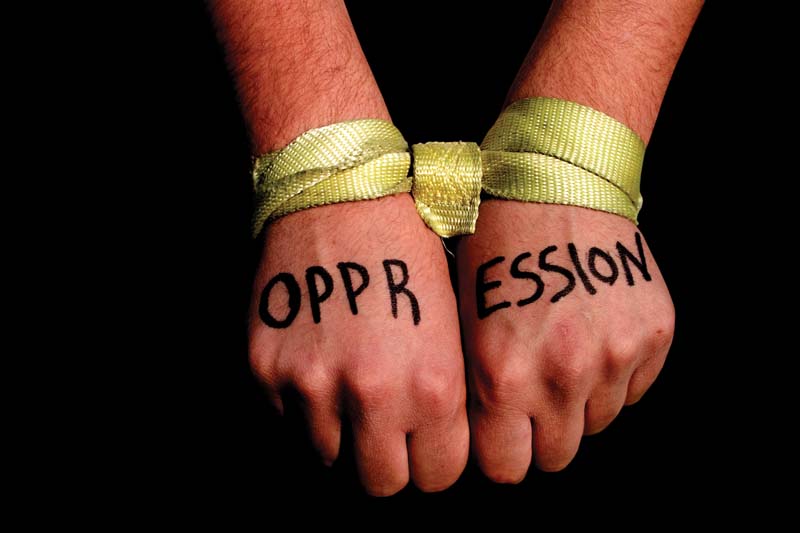
Doctors today feel oppressed, and Medicare is the major offender. Medicare tells doctors how much time to spend with patients; what they should write in the hospital and in their own private charts; who they can admit to the hospital; how much they will be paid for their labor; and all these directives are done with the constant threat of large fines and imprisonment if these "rules" are not followed. All of these rules apply even though the government promised that there was a "prohibition against any Federal interference" in the first paragraph of the original Medicare law.

Medicare has forced "Professionalism" out of medicine. It cannot pay for all the promises made to the people, and it continues to decrease reimbursement, and increase rules. Fifteen years ago, most doctors believed that they were being paid a reasonable wage for the work they were doing. Today, I and most other doctors believe we are not much more than controlled servants. We work hard for our wages, with difficult patients, taking risks that are not adequately reimbursed. Many services we deliver are "covered" under the "global" coverage of indentured servitude. Global coverage is a method that Medicare uses to force physicians into patient care situations that extract free work from physicians. It is all too common.

I have begun to wonder about the response of people that are forced into a system that they believe has no integrity. I think that doctors believe that Medicare has no integrity or honesty in its dealings with physicians. It continues to unilaterally cheat the providers with its many rules and restrictions. That cannot but encourage behavior in doctors which will not be helpful to patients.

I am searching the business literature for studies on this topic(how people behave in an environment that they believe is unjust), but have not found much yet. I intend to write about it later. How does someone behave when forced to work under a system that one believes has no justice? Why is it the malpractice rates keep going up, but reimbursement keeps decreasing? Are we doing something that is dangerous, but not worth much? I believe this system is not healthy or nurturing to the profession of medicine, and the social consequences have yet to be examined.

More to follow.

Dr. Weaver